Imagine the purchasing power of your currency suddenly falls by 50%, but your salary and bank balance remain unchanged. What would you change first? Bonus question: who might actually benefit from such a dramatic change?
Was there a particular purchase, experience, or moment when you noticed your dollars weren't going as far as they used to? Maybe it was groceries, housing, or simply comparing prices from your childhood. I'm curious what first made people question the purchasing power of their money.
Statism is the gradual replacement of civil society, markets, savings, and individual choice by political control, public spending, regulation, taxation, and monetary intervention.
In most developed economies, and increasingly in the United States since 2008, the dominant force is not free-market capitalism but a model of big government, chronic deficit spending, high debt, rising taxes, monetary debasement, regulatory obstruction, and political interventionism that protects insiders while penalizing new entrants. That is why so many millionaires and wealthy people support socialism. It is the perfect way to eliminate a merit-based system, obliterate competition, and keep privileges provided by political affiliation while demanding even more government control. Few people are richer and more powerful than socialist tyrants and their enablers. Meanwhile, socialism needs poor people that stay poor and remain submissive to the state.
Artificial money creation is never neutral. It disproportionately benefits governments and owners of assets that can protect themselves from monetary inflation. At the same time, it always hurts real wages, deposit savings, and those with no assets. Socialism is often sold as a rebellion against privilege, but in practice it is one of the most effective tools ever designed to entrench it. The bigger the state, the more valuable political access becomes. The more interventionist the system, the easier it is for large incumbents, bureaucracies, and connected interests to dictate regulation, capture subsidies, suppress competition, and decide who receives favors.
Brij Khurana, a fixed-income portfolio manager at Wellington Management writes in the Financial Times: “Perhaps there is no better example of the K-shaped nature of the US economy than the fact that employee compensation has fallen to 50 per cent of GDP, its lowest level since 1947, while household net worth is close to an all-time high of 546 per cent relative to GDP. This dichotomy helps explain the resurgence of socialism among younger Americans. Gen Z depends disproportionately on wages, whose purchasing power has been eroded by inflation, while baby boomers hold much of the country’s accumulated wealth. It is this wealth effect that is increasingly responsible for the inflation that remains in the US economy. Excluding shelter, core inflation has been relatively stable at about 2 per cent for the past three years. The stickiest components of inflation are related to housing, restaurants, travel and other services where demand is tied to wealth.
Socialism replaces success-driven inequality with a politically directed one. However, in statism inequality is a matter of price, not availability. Socialism leads to hyperinflation and scarcity because it ignores economic calculation and uses the debasement of currency to expropriate the wealth created by the remains of the private sector and keep citizens dependent and submissive, while the political leaders enjoy the perks of privilege. When the state spends too much and the central bank disguises the consequences, citizens are told they are being protected. However, they are being impoverished through currency dilution and asset inflation.
Inflation Is Falling. So Why Are Groceries Still So Expensive?
Have you ever heard that inflation is coming down, then gone grocery shopping and wondered what everyone was talking about?
The explanation comes down to a distinction that is easy to overlook.
A declining inflation rate does not necessarily mean declining prices.
Consider a hypothetical grocery basket:
Year 1: $100
Year 2: $110 — a 10% increase
Year 3: $115.50 — a 5% increase
Year 4: $118.97 — a 3% increase
Inflation has fallen from 10% to 3%.
Yet the same basket still costs nearly 19% more than it did three years earlier.
This is called disinflation: prices are rising more slowly, but the price level continues increasing.
Actual deflation would mean prices declining.
This distinction helps explain why reports of declining inflation can feel disconnected from everyday experience.
There is also the question of wages.
Even if prices stop increasing rapidly, households may remain financially strained if their incomes have not caught up with the higher price level.
A lower inflation rate does not automatically restore previously lost purchasing power.
Nor do all prices move together. Groceries, housing, utilities, and insurance can follow different paths from the national average.
Here's the question: Should the public conversation focus less on the annual inflation rate and more on cumulative increases in the cost of necessities relative to household income?
Because knowing that prices are rising more slowly is useful.
But knowing whether people can actually afford what they need may be even more important.
Goldwin Smith’s Dire Warnings About Paper Money Matter More Than Ever
In 1883, Goldwin Smith gave an address, later published as False Hopes: Or, Fallacies Socialistic and Semi-Socialistic, Briefly Answered, taking on a number of the political and economic fallacies of his time. His remarks on inconvertible paper money are still worth considering today....
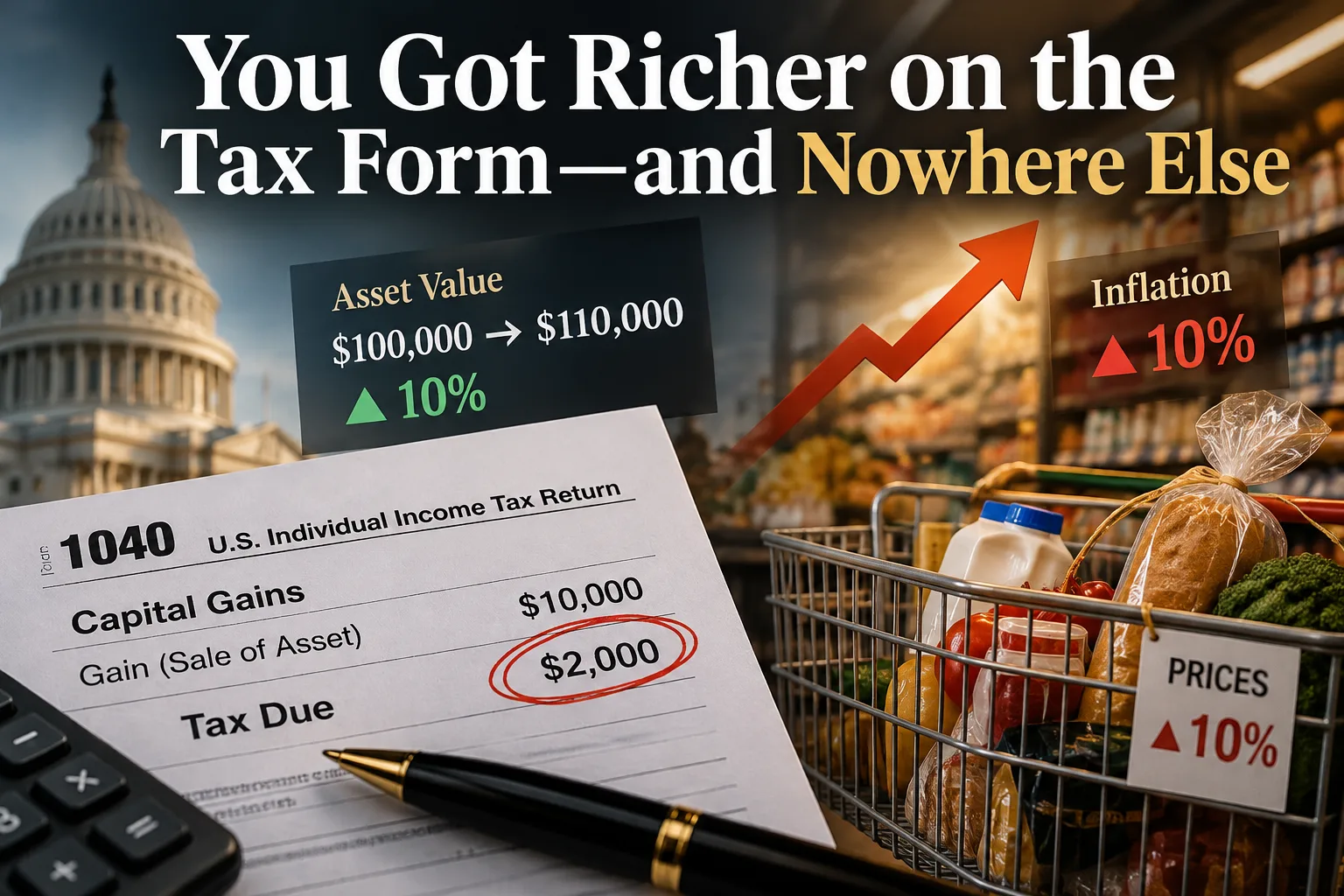
You Got Richer on the Tax Form—and Nowhere Else
You Got Richer on the Tax Form—and Nowhere ElseSuppose you buy an asset for $100,000. A year later, it is worth $110,000. On paper, you made $10,000. Your investment rose 10 percent, so it looks like you are 10 percent richer.Now suppose prices throughout the economy also rose 10 percent during that...
What Is Monetary Mastery? And Why Is It Different From Money Mastery and Financial Mastery?
What Is Monetary Mastery? And Why Is It Different from Money Mastery or Financial Mastery?Understanding how to manage money is important. Understanding the system that creates, distributes, and determines the value of money is something entirely different.Most people spend their lives learning how t...
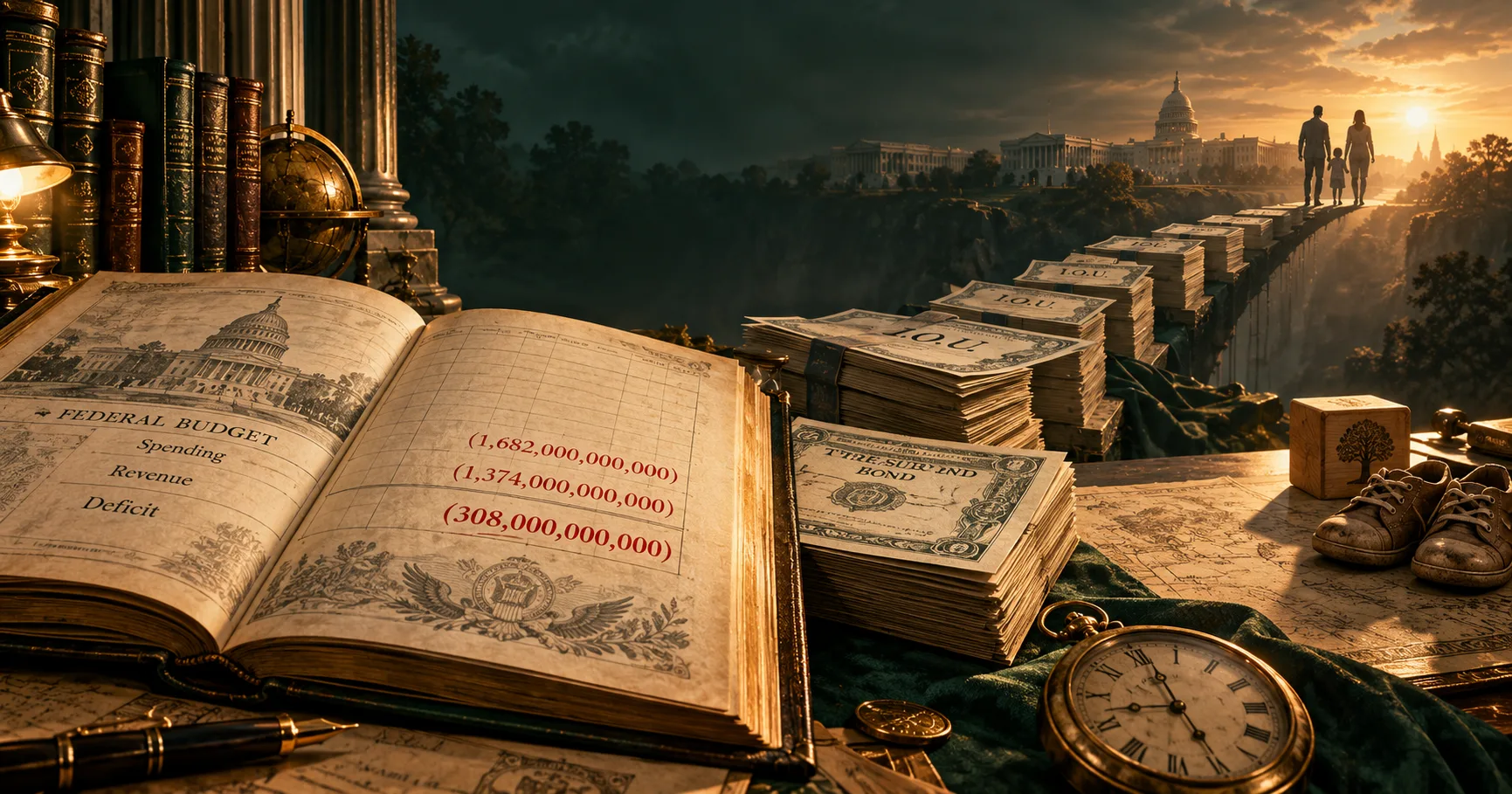
Deficit Spending and the Transfer of Costs to Future Generations
Deficit Spending and the Transfer of Costs to Future GenerationsWhen a government spends more than it collects in revenue, it must cover the difference. The usual methods are borrowing from the public or, in some cases, creating new money. Both approaches allow higher spending today. Both also shift...
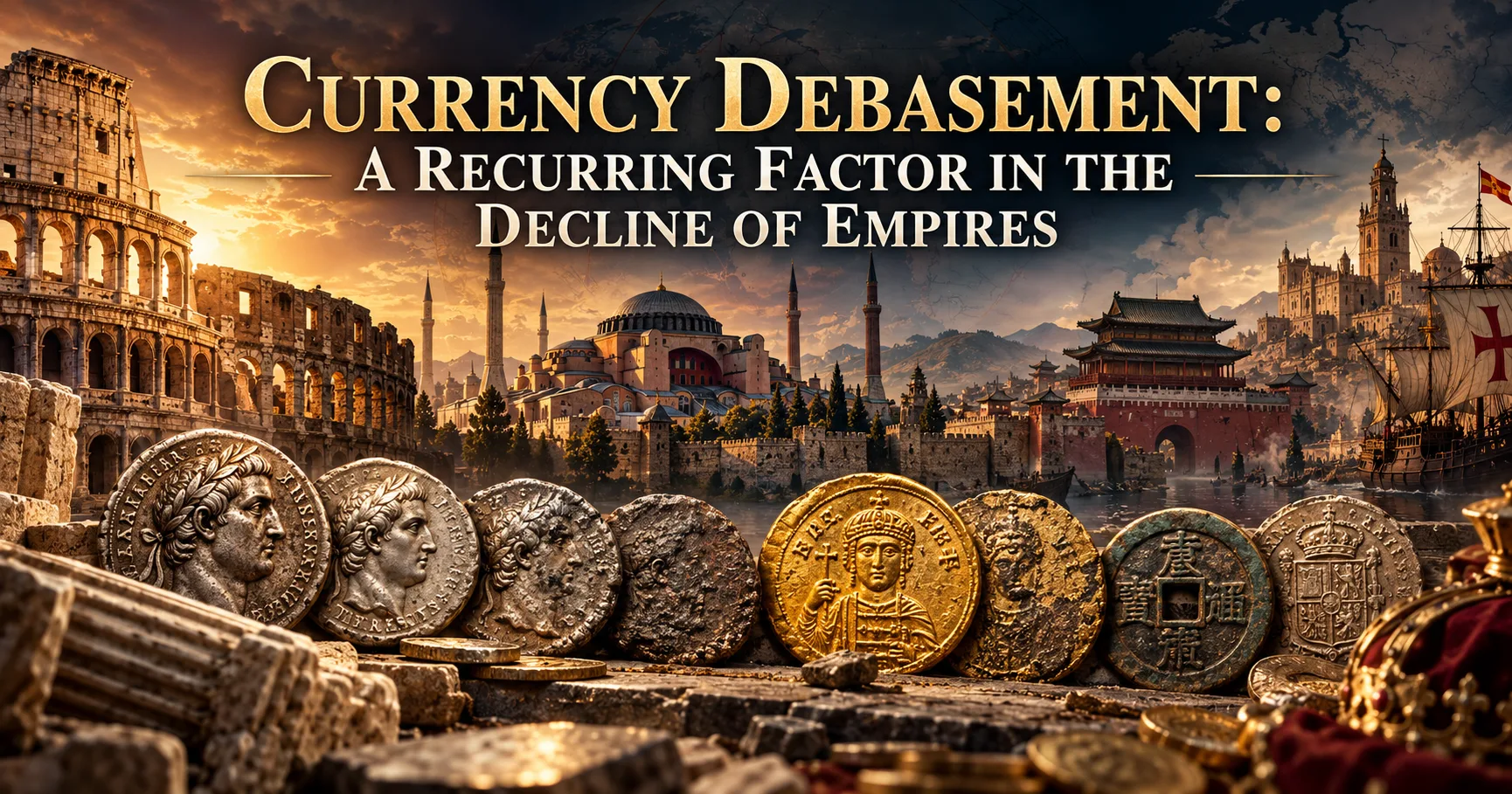
Currency Debasement: A Recurring Factor in the Decline of Empires
Currency Debasement: A Recurring Factor in the Decline of EmpiresMajor empires rarely collapse for a single reason. Military overextension, administrative decay, external pressure, demographic shocks, and institutional failure all contribute. Yet across widely separated times and places, one pattern...
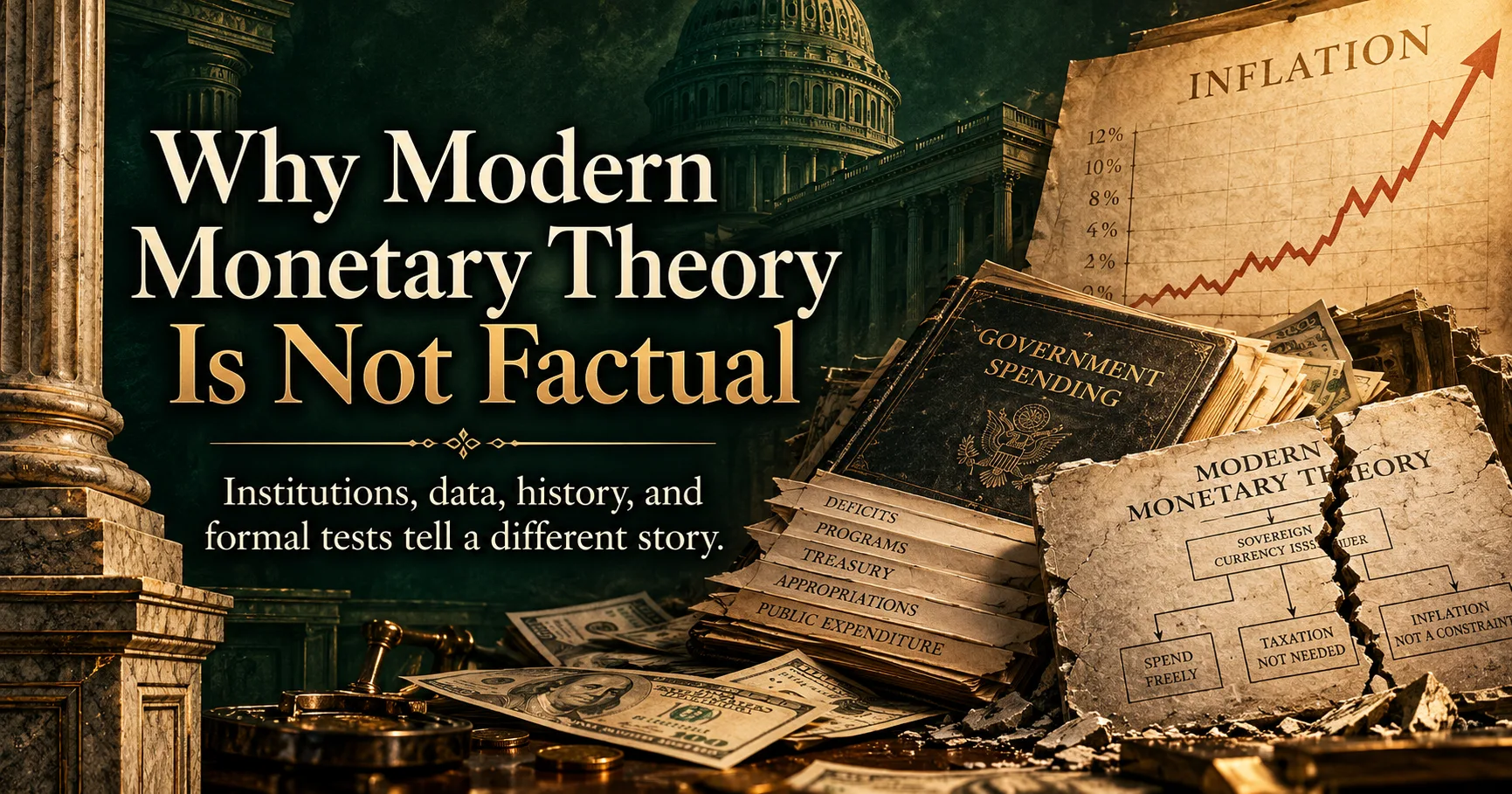
Why Modern Monetary Theory Is Not Factual — Expanded Evidence from Institutions, Data, History, and Formal Tests
Why Modern Monetary Theory Is Not Factual — Expanded Evidence from Institutions, Data, History, and Formal TestsModern Monetary Theory (MMT) presents itself as a neutral description of how currency-issuing governments operate. Its core claims are that such governments cannot run out of money, that s...
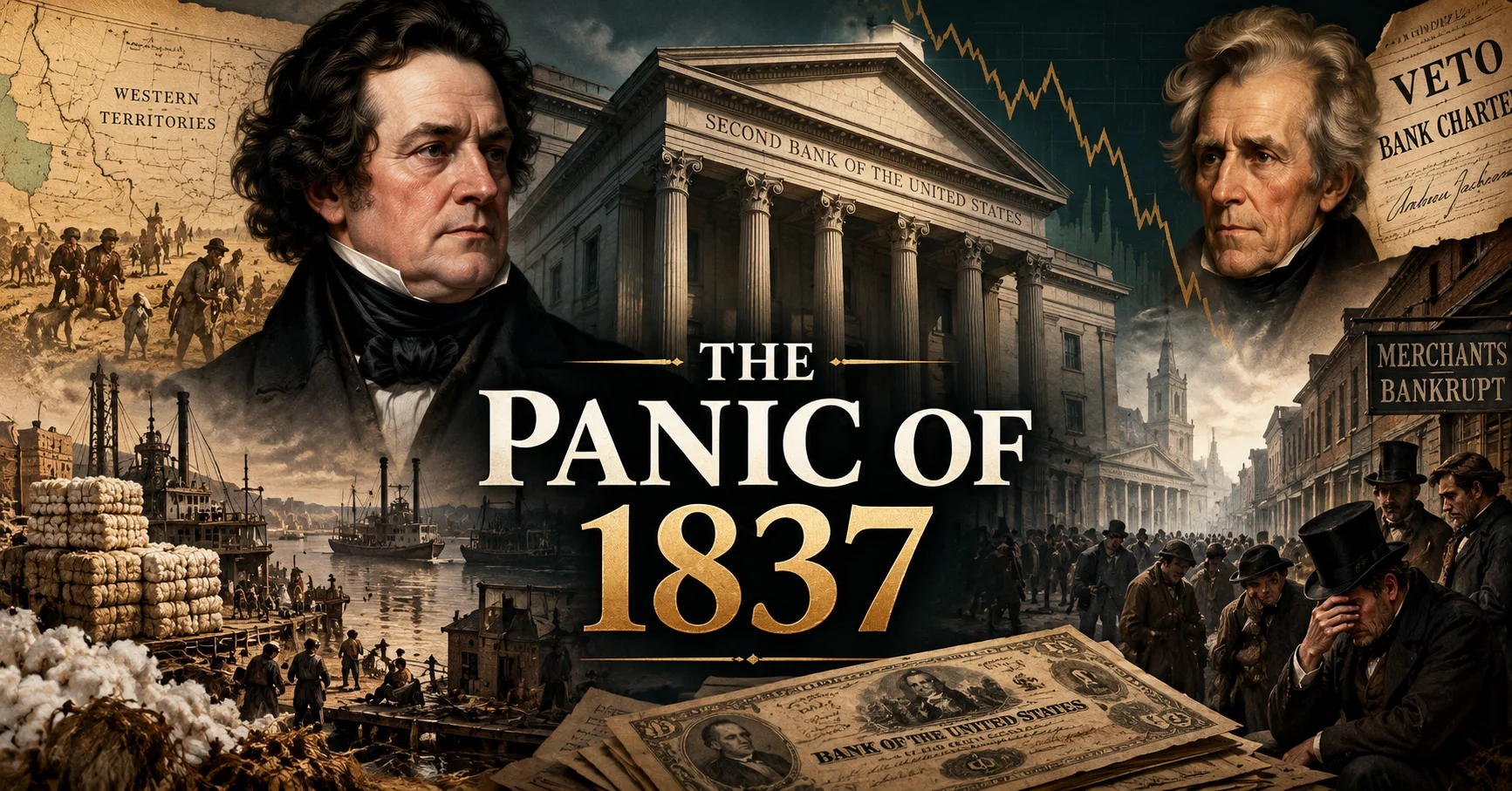
Second Bank of the United States
The Second Bank of the United States caused the Panic of 1837 through a deliberate, institution-saving policy reversal that crushed the economy it had previously inflated.Nicholas Biddle ran the Second Bank through the early 1830s and expanded credit aggressively. Member banks multiplied loans on to...
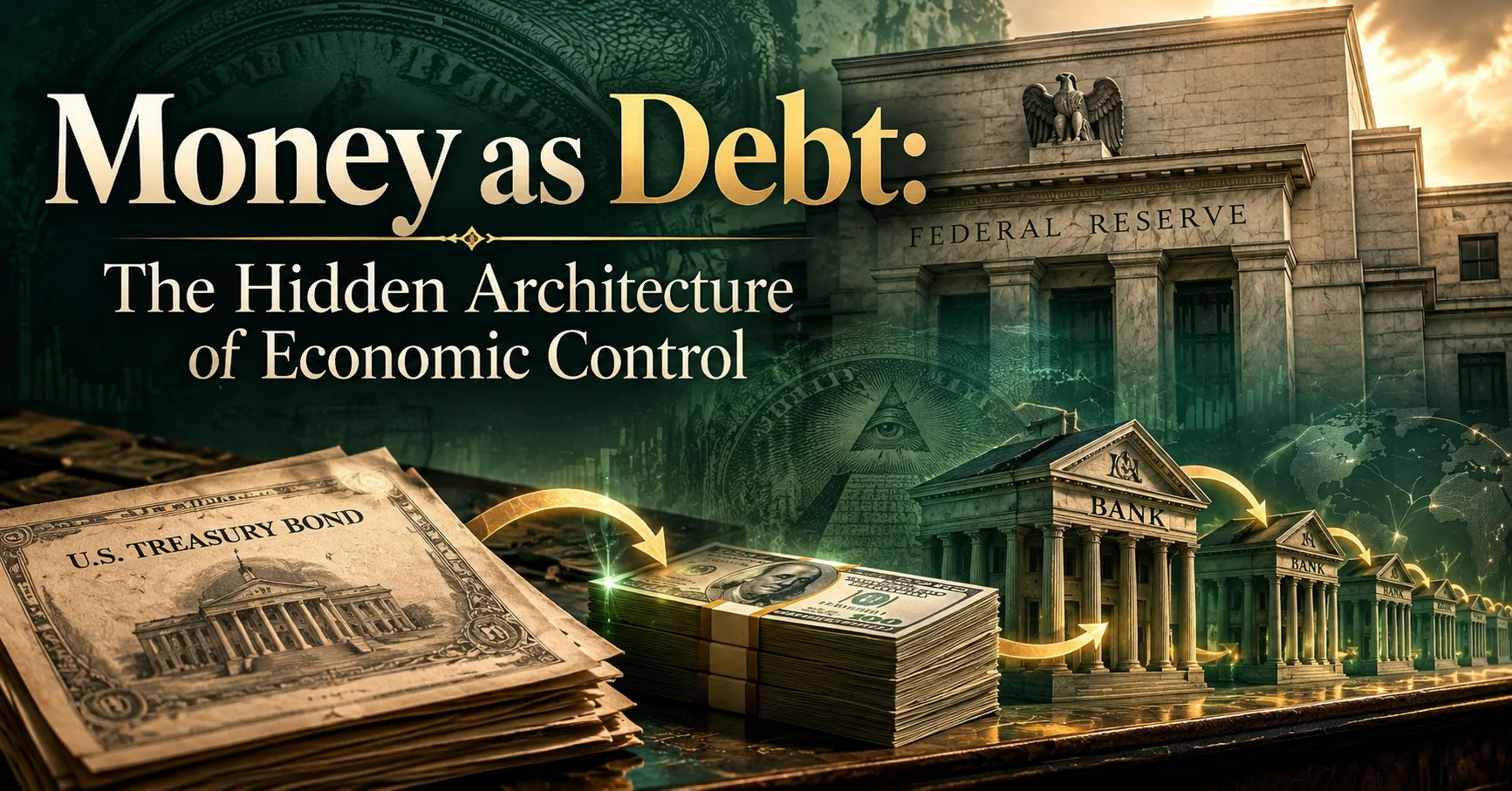
Money as Debt: The Hidden Architecture of Economic Control
Money as Debt: The Hidden Architecture of Economic ControlSociety is shaped by institutions—political, legal, religious, familial, and occupational. Of all these structures, none is more taken for granted, more poorly understood, and more consequential than the monetary system. Most people never ask...
Should Economics Be Taught Through Real-World Simulations?
Economics can be difficult to understand when students only see definitions, charts and equations.
But what happens when students are actually asked to make the decisions themselves?
A useful classroom or homeschooling activity could place students in charge of a fictional central bank during an economic crisis.
Students could be given changing information such as:
Inflation rising from 2% to 6%
Unemployment beginning to increase
Consumer spending falling
House prices weakening
Businesses reducing investment
Energy prices suddenly rising
Government borrowing increasing
The student or group would then have to decide whether to:
Raise interest rates, cut interest rates, leave rates unchanged, or introduce another policy response.
After every decision, the teacher could reveal the next stage of the simulated economy and show the possible consequences.
For example, raising rates may help reduce inflation but could also weaken borrowing, investment and employment.
Cutting rates may support economic activity but could risk keeping inflation higher for longer.
The purpose would not be to find one "perfect" answer.
Instead, students would learn one of the most important lessons in economics:
Economic policy usually involves trade-offs.
Suggested Classroom Activity
Split students into small groups and make each group a fictional central-bank committee.
Give them the same economic data.
Each committee must decide:
What is the biggest economic problem?
Should interest rates rise, fall or stay the same?
What evidence supports the decision?
What could go wrong?
Which groups in society might benefit or lose from the decision?
Each group then presents its decision before seeing what happens in the next stage of the simulation.
Discussion
Should economics education include more decision-making simulations, debates and real-world scenarios rather than relying mainly on textbooks and worksheets?
Could activities like this help students understand why central-bank decisions on inflation, employment and interest rates are often far more complicated than they first appear?
What other real-world economic situations would make good classroom simulations?
For much of the period following the 2008 financial crisis, many advanced economies experienced unusually low interest rates, relatively modest inflation and cheap access to borrowing. Governments, companies, households and financial markets gradually adapted to that environment.
But what happens if that era is over?
This discussion asks whether the global economy is moving into a longer period where inflation is harder to control, interest rates remain structurally higher, government debt becomes more expensive to finance, and economic growth becomes increasingly difficult to sustain.
This matters far beyond financial markets.
Higher interest rates can affect mortgages, business investment, government budgets, employment, house prices, pensions, currencies and the cost of servicing national debt. At the same time, keeping rates too low for too long can create different risks, including renewed inflation, excessive borrowing and inflated asset prices.
The central question is therefore:
Can governments and central banks achieve sustainable economic growth while controlling inflation and managing historically large levels of debt?
Several forces deserve particular attention.
Inflation
Was the recent inflationary period primarily a temporary consequence of supply disruption, energy prices and extraordinary economic events, or have deeper structural changes made inflation more persistent?
Globalisation, ageing populations, labour shortages, energy transitions, geopolitical tensions and changing supply chains could all influence the future cost of goods and services.
Interest Rates
For years, businesses and consumers became accustomed to exceptionally cheap borrowing.
If borrowing costs remain higher than the levels seen during the 2010s, what happens to economies built around cheap credit?
Could higher rates encourage healthier capital allocation and saving, or could they suppress investment, housing activity and entrepreneurship?
Government Debt
Many governments carry substantially larger debt burdens than they did before the global financial crisis.
When interest rates rise, servicing that debt becomes more expensive.
That creates difficult choices between taxation, spending, borrowing and investment. Governments may increasingly have to decide whether resources should go towards public services and infrastructure or towards servicing existing debt.
The Overlooked Factor in Tax Revenue: Money Velocity
Money Velocity, Tax Rates, and Revenue: Why the Speed of Money Matters as Much as the RateMost discussions of tax policy treat revenue as a simple product of rates and a fixed base. Raise the rate, collect more money. Lower the rate, collect less. This arithmetic view is incomplete. Tax revenue is g...

Peak Prosperity
Many people have asked us, “Where are the large-scale solutions to all the problems you have described?” and “What should we do as a nation to avoid the seemingly inevitable consequences of this fiat money system?”
We believe that we must reach a critical mass of individuals and ensure that they have an understanding of the ideas presented in the Crash Course, before any national or global solutions will even be possible.
Because we are still quite far from this tipping point of understanding, we must first focus on educating. Many people have already reached a place of understanding and assumed responsibility for their futures, but most have not. Once we have achieved a critical mass of people who understand the issues and have taken responsible actions as a result, solutions will find more fertile ground in which to take root.
The earliest forms of money included salt and grain. Both were universally desirable.
But there were serious flaws with these “currencies”. Salt would dissolve in water. Grain spoiled.
And they weren’t valuable enough. So these items worked for crude barter, but that’s about it.
Around 5,000 years ago, when men began to mine and process metals, copper became money. Rings, bars, and even crude early coins.
Early on, copper was highly valuable because it could be made into knives, axes, and other tools.
In ancient China, governments even issued copper alloy knives as a form of currency. Talk about hard money…
Bronze, an alloy of mostly copper and tin, was a major tech breakthrough. It was sturdier than plain copper, making better tools, weapons, and armor.
For hundreds of years, copper and bronze ingots, coins, and bars were a common form of money.
But as mining activity increased, these metals became too common. The value was too low to carry much wealth around. You’d need a chest full of it to buy a cow.
Silver, a more rare metal, became the favored currency. It was the Goldilocks form of money. Not too rare, not too common. Just right.
And for most of the past 3,000 years, silver has been the world’s preferred form of money. With several interruptions, all of which proved to be temporary.
The Modern Gold Era
Gold has also been a form of money for thousands of years. But before industrial-scale mining, it was rare.
Only the wealthiest citizens would own a decent chunk of gold. This is even true today. Many regular people can’t afford to buy ounces of gold at $4,400 a pop.
Silver was (and is) the people’s money. It’s about 9x more common than gold. Still rare enough to be valuable, but common enough that most people can own some.
Throughout ancient history, the gold-to-silver ratio averaged around 10. Meaning gold was 10 times more valuable than silver.
Today, 1 ounce of gold is worth 67 ounces of silver. So silver is valued far lower than it was throughout history (compared with gold).
Silver has been de-monetized. Since 1965, it is no longer in our coins.
It is now a primarily industrial metal. Silver is the best electricity conductor on the planet. It also resists corrosion, making it critical for modern electronics.
The metal is particularly useful in solar panels, where it drives efficiency and long life. Solar power alone accounts for about 22% of total silver demand today. And industrial utility gives silver a lot of value by itself.
Today, gold is much more of a monetary asset than silver is. That’s primarily because central banks, like the Federal Reserve, still hold vast sums of gold as reserves.
But gold’s reign as the king of hard currency may not last forever…
Silver’s Inevitable Return
Since silver was de-monetized in 1965, it has been a rollercoaster of price action.
Throughout the 1960s, the U.S. government dumped their stockpile of silver at bargain basement prices.
The 1970s is when things got interesting. That was a period of inflation, slow growth, and financial chaos. It’s when the fiat (paper money) era began.
And periods like this are when silver shines.
Silver began 1970 trading around $1.80. By November 1971, it had fallen to $1.27. From there it went on one of the craziest bull runs in history, reaching nearly $50 in early 1980.
With high inflation throughout the 1970s, everyone looked for ways to preserve their wealth. For many people, silver fit the bill.
Yes, there was a sophisticated effort to “corner the silver market” by the Hunt Brothers, which helped drive up prices. Without them, silver wouldn’t have gotten close to $50. But the move would have been more durable. I wrote a letter on the Hunt Brothers and silver last year here.
The point is that when inflation gets nasty, ordinary people turn to silver for monetary salvation. It’s practically in our DNA.
A Silver Phoenix
Silver was the world’s favorite form of money for thousands of years. Today it’s still largely viewed as a monetary relic.
A metal that used to be money, but is now used for electronics. This will change once inflation rears its ugly head again, as we move further into the debt crisis.
People will seek out silver as an inflation hedge, store-of-value, and speculative asset. We’ve already seen hints of this, like during the silver price runup earlier this year. But that was just a hint of what’s ahead.
Because silver is primarily an industrial metal today, it is mostly priced according to that demand. Demand which is relatively predictable. Analysts model out industrial demand based on trends and surveys, and can get a pretty good idea about where the price should be headed.
But investment demand for silver is much harder to model. A full-on mania is impossible to accurately predict.
Only about 18% of silver purchased today is for investment purposes. Coins and bars. That’s why the metal is priced like an industrial input rather than a monetary asset.
But if investment demand creeps up to just 25%, that’d create fireworks. Like we saw briefly earlier this year, when silver ran from $35 to $115 in about 9 months.
And I suspect that silver will eventually make an even bigger return as the debt crisis progresses, and inflation worsens. As the world becomes more digital (and hackable), people will want a hard asset to store their wealth. And for many, gold’s out of the question. Too expensive.
Once again, silver will emerge as the metal of the people. A tool to help us preserve and grow our wealth.
Silver is currently trading at around $65 an ounce. I think that’s a fine price to buy at for long-term investors. It’s difficult to say what silver will do over the next 6 months, or even a year.
But over the next 5 years, I’m confident we’re headed much higher. And when silver inevitably goes through its next mania phase, I want plenty of exposure.
So I’m patiently holding. Waiting for the next mania phase.
The Hoover Dam Through a Garden Hose
And let’s not forget about silver miners. When the next mania phase hits, they are going to go ballistic. Check out the chart below, which shows the market cap of every silver miner ($66 billion) vs the value of big tech stocks.
As you can see, every silver miner in the world combined is worth just 1/80th of Nvidia (NVDA). So during a silver mania, a flood of money pours into a very small sector.
This reminds me of a quote from Doug Casey:
“The market capitalization of silver [miner] equities is insufficient to accommodate the inflows of capital from generalist investors when the precious metals narrative takes over.
When the generalist investors come in, the result is like trying to siphon the flow of the Hoover Dam through a garden hose.”
It’s a great reminder that silver, and the companies who mine it, are tiny. So when money rushes in, the results can be absolutely explosive.
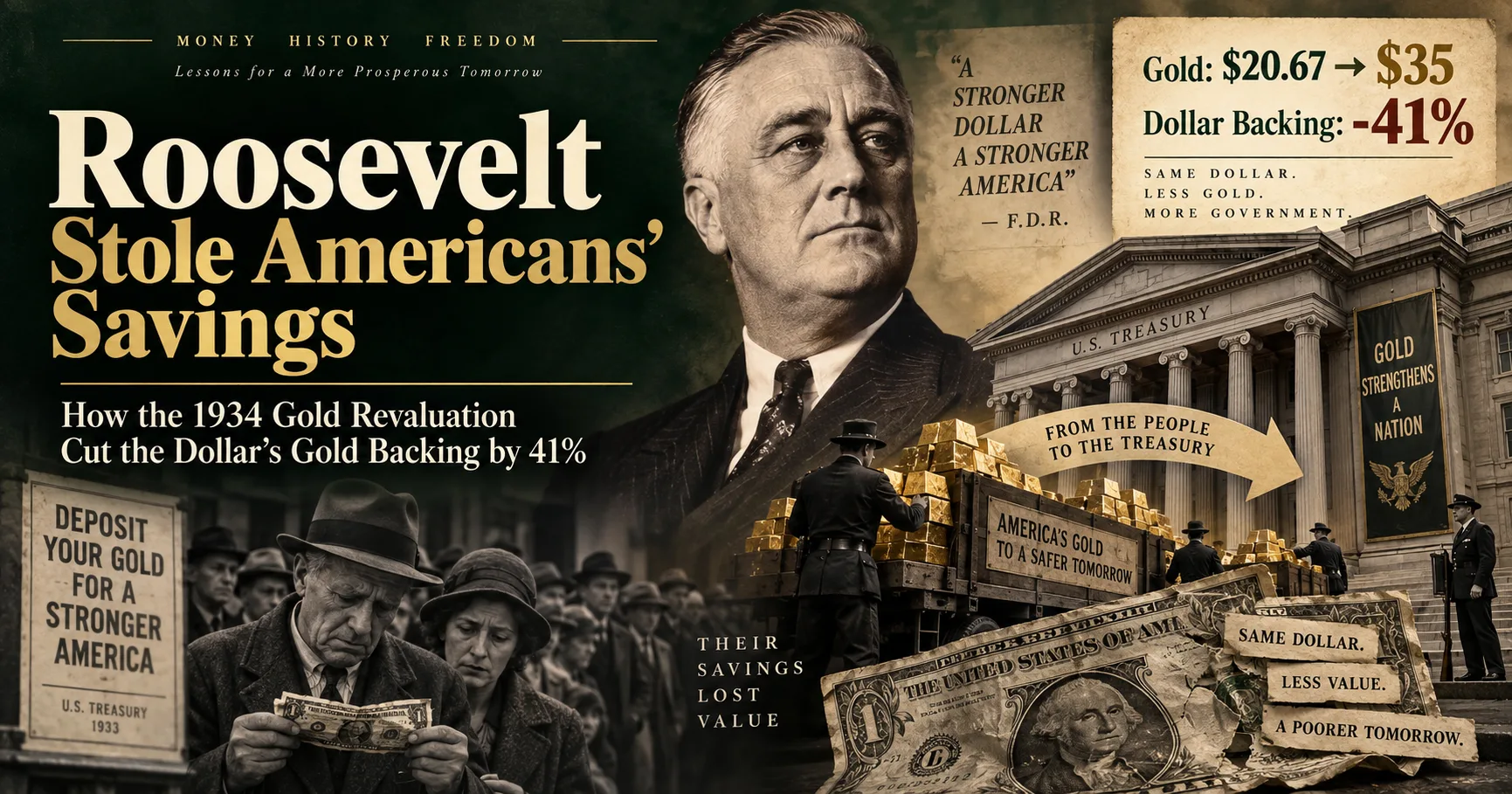
Roosevelt and Gold Robbery
Roosevelt stole all US citizens' savings in January 1934 with one simple trick.The Gold Reserve Act handed all gold held by the Federal Reserve to the Treasury, then let Roosevelt reprice gold from $20.67 to $35 per ounce by executive proclamation. That single move cut the dollar's gold content by 4...
A lot of people are finding it very difficult to save money. It's not because they don't want to save but because they have too many bills to pay which makes it impossible to have anything meaningful to save after paying for so many expenses.
Do you struggle with saving from your monthly income?
Bank of England
The Bank of England was born in 1694 to fund a war. William III needed £1.2 million to fight Louis XIV, Parliament wouldn't raise the taxes, and a group of London merchants solved the problem by creating money from nothing. That arrangement has never really ended.The mechanics were straightforward....
Today, I believe so many people including students are still making so many mistakes with money and it's because they are not taught well how to best manage money in school. It's why some are still in debt years after they are out from school and all having worked for years.
What are the biggest mistakes young people make with money?
Have you bought gold, silver, stocks, bonds, crypto, etc? Post it here!
I've always enjoyed supporting local businesses whenever I can but competing with multinational bigger companies isn't easy. Honestly I think the playing field simply too uneven for them to enjoy success on a big scale.
Do you think small businesses can still grow and succeed?
Reuters:
Japan’s benchmark 30-year bond yield hit the 3% level for the first time since 1996 on Tuesday amid a broad-based global bond sell-off
MarketWatch:
From the UK to Japan, bond yields are jumping as US bonds tumble
Sometimes, the most obvious problems are the easiest to solve. An alcoholic has problems. His wife doesn’t understand him. His boss doesn’t like him. He needs a new car. His head aches and his friends desert him.
But his major problem: he drinks too much. This is very easy to correct. Just stop drinking. The simplicity of it makes it almost unbearable…and unthinkable.
Japan has been on a bender for 35 years. Its stock market bubble popped in 1990. Its feds have been pumping like crazy ever since, trying to get the buzz back on. They’ve inflated Japanese government debt to the largest in the world — at 250% of GDP, twice the US level — hoping to revive those glorious, intoxicating go-go years of the 1980s. That was when Japan Inc. was the envy of every business school in the world.
Back then, in the ‘80s, Japan’s industries —Mitsubishi, Toyota, Honda — dominated the financial pages. Then, after the crash, Japan continued to lead the world, but in borrowing. And now Japan has one massive hangover.
When you stop drinking your recovery begins almost immediately. But as Marc Antony said over the body of Caesar, ‘the evil that men do lives after them.’ You can stop spending, but the shadow of the past — debt — stays with you.
And Japan is not the only one living in the shade of debt. It’s been party time, worldwide, ever since Alan Greenspan revealed his ‘put option’ for the stock market. Free drinks. No closing time. Stock prices could go up all they wanted; but if they began to fall, the Fed would cut rates to catch them.
As a result, world debt is estimated at $329 trillion — or more than three times GDP. The US is right in line with more than $100 trillion in debt…or, about three times GDP. That doesn’t include the $15 trillion or so the feds are legally obligated to pay their own government retirees.
The dipsomaniac may be jolly or morose…rich or poor…smart or dumb. But until he gets that monkey off his back, he’s going to have trouble.
The US has problems too. Iran. Canada. A ‘heat dome.’ Water shortages. Hurricanes. Illegal immigrants. Obstreperousness overseas. Lawlessness at home. Mosquitoes. But the big ape on the back of the US is obvious. It’s the one neither political party wants to talk about. And no wonder; they put it there.
It’s the debt, stupid– the price of all the dumb ‘problem solving’ of the past. Who wants to remember them? Old girlfriends. Empty bottles and cigar stubs. Yesterday’s newspapers. The Gulf War of 1991…Obama’s record $1.4 trillion deficit in 2009, LA riots of 1992…Hurricane Andrew…Oklahoma City bombing…Monica Lewinsky?
All have faded from public memory…but the bills, great or small, are still unpaid. They are among the $40 trillion worth of accumulated federal debt that must be serviced every year, for ever and ever, Amen. At just 5% interest, the annual charge will soon come to $2 trillion per year, whether anyone remembers what the money was spent on or not. Federal tax receipts last year were $5.2 trillion. So, nearly half of the feds’ revenue is now headed to pay for things that were always a waste of money…and now, are largely forgotten.
Politicians don’t want to talk about it because solving the debt problem will hurt. Like cutting off a gangrenous finger without anesthetic or going ‘cold turkey’ in an asylum, neither party has the stomach for it. The voters will howl. The press will harrumph. Wall Street will quake. And, most likely, some fringy politician will take charge…and start a war to take our minds off of it.
You can ignore a debt build-up; for a long time, it will seem ‘manageable.’ But then, after a party, you end up in a ditch. Drying out (aka deflation) won’t be pleasant. People only do it because the alternative is worse.
A debt hangover is hard to shake off. Short term interest rates are lower…and closer to ‘cash.’ So, the feds moved more of their borrowing to the short end of the yield curve. This leaves them needing to ‘rollover’ their debt more frequently — even as interest rates go up. Even if they balanced the budget tomorrow, they’d still need to refinance more than $1 trillion per month.
A report from Armstrong Economics tells us that $29 trillion will be borrowed this year:
Governments and corporations are expected to borrow a record $29 trillion from global bond markets in 2026, according to the OECD. That is $4 trillion more than in 2024 and twice the amount borrowed only ten years ago. This is the Ponzi structure underlying modern government finance.
Carlo Ponzi might be proud. Practically all of the world’s post-war western governments adopted his model.
But where are we going with this? Where else, the same place it took Ponzi himself: to Hell in a handcart! Ponzi died in a charity ward in Brazil, with only $75 to his name.
And now, there is no way a society can devote half its government’s revenues to paying for the bad investments of the past…at least, not indefinitely. And the most likely ‘solution’ is the most dangerous and painful one — inflating away the debt…which is like curing the hangover with a bottle of gin before breakfast.
But we shouldn’t be too surprised if a more audacious leader — such as Jean-Luc Melenchon in France — comes along with a more radical plan. The French leftist proposes to simply renege on a portion of French debt.
And maybe that wouldn’t be such a bad idea…
Stay tuned…
Are you for or against the issuing or credit card by the financial institutions? Personally, I don't have any business with using a credit card because I'm all in favor of using debit card always. Many people struggle to pay off their credit card debt because they spent more than they can afford to pay. It's why I don't like using credit cards.
Do you think credit card is good or bad news?