 Monetary Literacy & Mastery Foundation
The Money Detectives #02 — How Is Currency Created?
 MoneyMan
·
2 days ago
·
0 replies
·
16
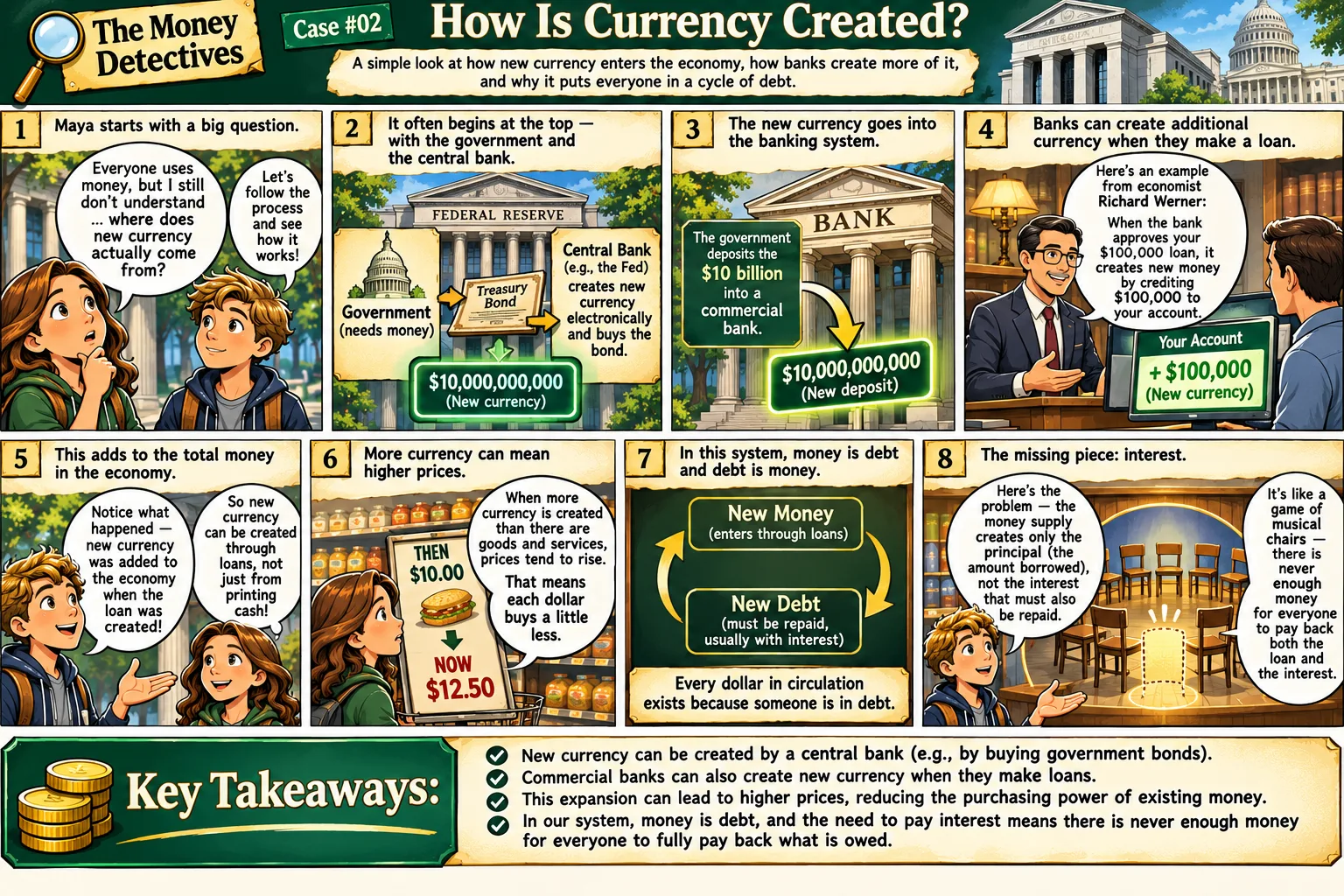
The Money Detectives #02 — How Is Currency Created?
Where does new currency actually come from?
Most people imagine that banks can only lend money that already exists. This comic introduces a different part of the modern monetary system: new bank deposits can be created when a commercial bank makes a loan.
It also introduces how central banks can create new currency when purchasing assets such as government bonds.
What This Comic Introduces
After reading, learners should understand that:
Much of the currency used today exists electronically rather than as physical cash.
Central banks can create new currency through transactions such as purchasing government bonds.
Commercial banks can create new deposit currency when they make loans.
The newly created deposit is added to the borrower’s account rather than being transferred from another customer’s deposit.
Creating additional currency increases the amount of money circulating through the economy.
Economist Richard Werner has demonstrated this process by following the accounting of an actual bank loan: when a bank approves a loan, it can create a new deposit in the borrower’s account.
Money Detective Question
If the bank did not take the new loan money out of another customer’s account, where did the new deposit come from?
Encourage learners to explain the process in their own words before moving on to the full lesson on bank credit creation.
For deeper study: Continue with MLMF’s lesson on how commercial banks create currency when they make loans.