 Monetary Literacy & Mastery Foundation
The Money Detectives #03 — What Did The Bank Actually Loan?
 MoneyMan
·
2 days ago
·
0 replies
·
15
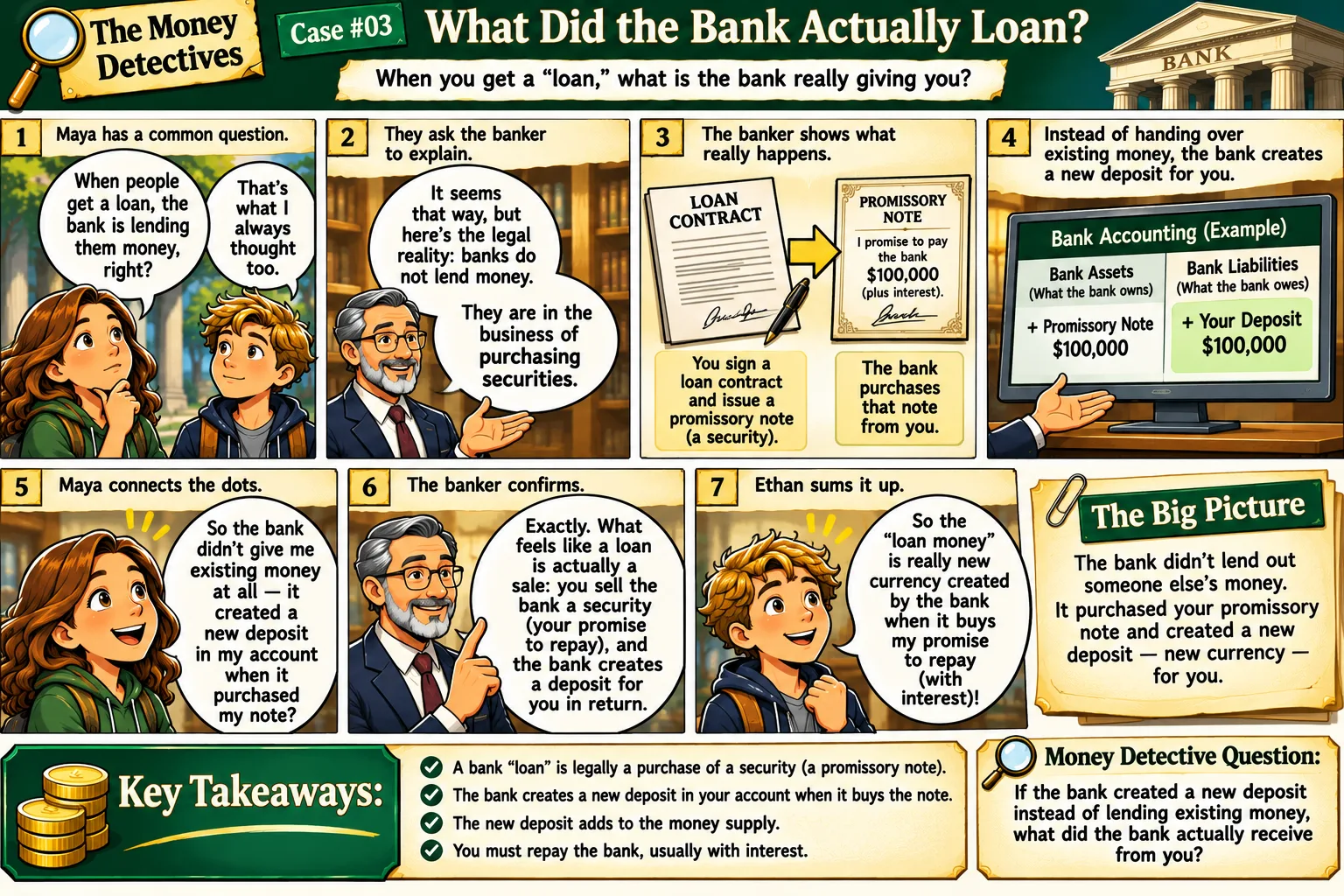
The Money Detectives #03 — What Did the Bank Actually Loan?
When someone gets a bank loan, it is easy to imagine that the bank is simply handing over money it already had.
This comic introduces a different way to understand the transaction.
When the borrower signs the loan agreement, the borrower issues a promissory note—a promise to repay. The bank accepts that note as an asset and creates a new deposit in the borrower’s account.
What This Comic Introduces
After reading, learners should understand that:
A bank loan is more than simply handing over existing money.
The borrower signs a promissory note promising repayment.
The bank records that note as an asset.
The bank creates a matching deposit in the borrower’s account.
The new deposit becomes newly created bank currency.
Economist Richard Werner describes this legal relationship as the bank purchasing a security from the borrower rather than lending out another customer’s deposited money.
Money Detective Question
If the bank created a new deposit for the borrower, what did the bank actually receive in exchange?
Encourage learners to answer in their own words before moving on to the full banking lesson.
For deeper study: Continue with MLMF’s lesson on how bank credit creation works and what happens on the bank’s balance sheet.