Monetary Literacy & Mastery Foundation

Monetary Literacy & Mastery Foundation

money.forumspark.net

Join the Monetary Literacy & Mastery Foundation to understand how money, banking, inflation, and central banking really work. Free educational resources, community discussions, and structured learning for sound money principles.

24 members 261 topics 1K replies
MoneyMan ·Economic Roundtable ·1 month ago
Money as Debt: The Hidden Architecture of Economic Control

Money as Debt: The Hidden Architecture of Economic Control

Money as Debt: The Hidden Architecture of Economic Control

Money as Debt: The Hidden Architecture of Economic ControlSociety is shaped by institutions—political, legal, religious, familial, and occupational. Of all these structures, none is more taken for granted, more poorly understood, and more consequential than the monetary system. Most people never ask...

Read the full article →

1 reply 90 Read more →
MoneyMan ·Teaching Resources ·1 month ago
Teaching Pack 05: When More Dollars Buy Less
Teaching Pack 05

When More Dollars Buy Less Understanding Purchasing Power

A bigger paycheck or savings balance can look like progress. Find out whether it buys more by comparing the numbers with the prices of everyday goods and services.

Ages 13–18 15-Minute Core Activity Worksheets, Simulator & Documentary
The Central Question

Can a Pay Rise Leave You Buying Less?

The dollar amount tells only part of the story. Purchasing power tells us what that amount can buy.

Compare two wage paths in the Purchasing Power Simulator, or use an unchanged shopping basket to test a larger paycheck on paper. Then explore what happens to savings when interest and prices grow at different rates.

Designed for homeschooling, summer learning, classroom enrichment, and library groups. Choose one activity for the short session. Historical data, documentary viewing, and assessment are optional extensions.

01

Look Beyond the Balance

Distinguish the number of dollars from what those dollars can purchase.

02

Compare Pay With Prices

Test whether income and savings keep pace with the same basket over time.

03

Check the Measure

Ask which prices, dates, and households a comparison actually represents.

Teach It Online or on Paper

Choose an activity and use the printable materials attached to this topic.

01

Prepare the Activity

Suggested level: Ages 13–18, introductory. Basic reading and division are enough for the core activity. Percentage calculations are optional. Either route works with one adult and one learner.

Time: Prepare for 5–10 minutes. Allow 15 minutes for one core route, discussion, and an exit sentence. Add 5–10 minutes for savings or assessment, 15–20 minutes for the historical calculator, or viewing and reading time followed by 15–20 minutes for the documentary worksheet.

Online route: Use student pages 1 and 3, a connected device, pencil, and the Purchasing Power Simulator. Enter the starting settings before teaching.

Paper route: Use student pages 2 and 3, pencil, and a calculator. No internet or personal financial information is needed.

Curriculum connection: Pack 03 and Money vs. Currency introduce purchasing power. Pack 04 explores income and price timing. This pack adds measurement, with Nominal Confusion as extended reading.

“

Count What It Buys

The number of dollars is one measurement. What those dollars buy is another. A bigger paycheck can buy less if prices rise faster than pay. A savings balance can grow through interest while losing purchasing power.

To compare fairly, use the same period and the same basket of goods and services. A nominal amount is the number in current dollars. A real amount adjusts for the change in the chosen price measure.

02

Predict, Compare, and Explain

0–2 minutes · Predict.
Can your pay rise while what it buys falls? Record a reason.

2–4 minutes · Introduce.
Read the explanation above and introduce one activity.

4–9 minutes · Compare.
Run A and B online, or calculate what monthly pay and an unchanged $100 can buy on paper.

9–13 minutes · Discuss.
Work through the three questions below. Oral answers are fine.

13–15 minutes · Explain.
Complete the exit sentence and revisit the prediction.

03

Same Prices. Two Wage Paths.

Use student page 1 and open the Purchasing Power Simulator. These are illustrative model inputs.

01
Set Up Run A

Choose Open Laboratory. Set Annual Income to $60,000; Cash Savings to $25,000; Annual Price Inflation to 5%; Annual Wage Growth to 2%; Savings Interest Rate to 1%; and Time Horizon to 10 years.

02
Run and Record

Select Run Purchasing Power Analysis. Record the future nominal income, real income change, cost of the $100 basket, and purchasing power of an unchanged $100. Use end-of-horizon results; set the timeline to year 10 if reading it.

03
Change One Input

For Run B, change only Annual Wage Growth to 5%. Run the analysis again and record the same results. What changed, and what stayed the same?

04
Optional Savings Check

Compare future nominal savings with their purchasing power in today’s dollars. Why do the savings results remain the same in both runs?

Model limits: Constant annual rates, no additional savings contributions or withdrawals, and no taxes or fees. The comparison illustrates a mathematical relationship; it is not a forecast.

04

The Same Basket, a Bigger Paycheck

The fictional example: One year ago, an unchanged basket of goods cost $100. Today it costs $125. Monthly pay rises from $1,000 to $1,100. We compare buying capacity; nobody has to spend the whole paycheck.

Before

Basket price: $100
Monthly pay: $1,000
How many basket-equivalents can this pay buy?

After

Basket price: $125
Monthly pay: $1,100
How many basket-equivalents can the new pay buy?

Calculate: Basket-equivalents = dollars available ÷ basket price. Fractions are allowed: 2.5 means the buying capacity of two and a half baskets. Complete the pay row on student page 2, then compare what an unchanged $100 can buy before and after.

Explain: Has pay increased in dollars? Has its buying capacity increased? Use the quantities to support your answer.

Optional savings: A $500 balance earns 5% interest and becomes $525 over the same year. No deposits or withdrawals are made. Compare the basket-equivalents it buys before and after.

Optional percentage challenge: Calculate the percentage rise in the basket price and the percentage fall in what an unchanged $100 buys. Why are they different?

Assumptions: The basket’s contents and quality stay fixed; taxes and fees are excluded. The price increase is invented and does not establish what caused inflation.

Three Questions to Work Through

Use student page 3 and support your explanation with the activity.

01
How can a larger paycheck buy less?

Separate the dollar amount from what it can purchase. Use one result from your chosen route.

02
What would pay or savings need to do to keep the same purchasing power?

Explain what must match, using the same period and comparison basket.

03
Would every household experience the same change in living costs?

Give one reason and one piece of information needed to compare two households.

Student Exit Sentence
A larger dollar amount does not necessarily mean … To find out whether I can buy more, I need to compare …
05

Check Your Understanding

A. In a new example, the same basket rises from $100 to $110 and pay rises from $1,000 to $1,100. Compare how many baskets each paycheck buys.

B. Prices rose 5% last year and rise 2% this year. Are prices now falling? Explain. Optional: calculate the cost of an initially $100 basket after both years.

06

Compare the Measures

Use student page 4 and the Inflation Calculator. Set Starting Amount to $100, From to 2001, and To to 2024.

Run the calculation for CPI-U, AIER Everyday Price Index, and LISEP True Living Cost. Record each equivalent 2024 amount, cumulative price change, and the date checked.

Read the notes on baskets and populations. This calculator uses January observations for CPI-U and EPI but annual estimates for TLC. Discuss how those differences affect the comparison and which measure may be relevant to a particular household.

Then select M2 Monetary Inflation. Explain why retaining the same proportional share of a money stock is different from buying the same basket of goods. M2 growth is not itself a consumer price inflation rate.

Arithmetic check: For an equivalent amount E, the cumulative price rise is (E ÷ 100 − 1) × 100%. The buying power of an unchanged $100, in starting-year dollars, is 10,000 ÷ E. Apply this check to the price measures.

07

Watch, Read, and Check a Claim

Watch: Hidden Secrets of Money, Episode 1: Money vs. Currency. Preview it before teaching; assign the full film or a checked excerpt. Allow viewing time separately.

Read: In the second post of Nominal Confusion, read What Is Nominal Confusion? and The Real Return Calculation. Allow reading time, then 15–20 minutes for student page 5.

1. Locate: Paraphrase a film claim about storing value or purchasing power. Record actual start and end timestamps. Is it a definition, a historical claim, or a prediction?

2. Test: Which dated prices, wages, or other records could support or challenge the claim? Why can a classroom model alone not establish a historical result?

3. Calculate: A savings balance rises 8% while a comparison basket rises 6%. Calculate (1.08 ÷ 1.06 − 1) × 100% and explain the result.

4. Reconsider: What would you now explain differently about a larger paycheck or balance? Name a question you still want to investigate.

08

Check the Buying Power

Paper route: Monthly pay buys 10 baskets before and 8.8 after. The new pay is worth $880 in starting-year dollars, a 12% real decline despite a 10% nominal rise. An unchanged $100 buys 1 basket before and 0.8 after.

Savings: $500 buys 5 baskets before; $525 buys 4.2 after. The new balance has $420 of starting-year purchasing power, a 16% real decline. The basket price rises 25%, while the buying power of unchanged cash falls 20%.

Simulator, Run A: Independently calculated year-10 income is $73,139.67, worth $44,901.41 in starting-year dollars: a 25.16% real decline.

Simulator, Run B: Income is $97,733.68, worth $60,000 in starting-year dollars: no real change. In both runs, the original $100 basket costs $162.89, and unchanged $100 has $61.39 of starting-year buying power.

Simulator savings: Both runs produce $27,615.55 nominal savings, worth $16,953.55 in starting-year dollars. The teacher PDF gives the formulas. These are calculated expectations for the specified settings; allow for interface rounding.

Discussion: Compare growth in dollars with prices over the same period. Equal growth preserves buying power in the simplified model. Household budgets and price experiences differ; a national index is an average.

Assessment: A: both paychecks buy 10 baskets. B: prices are still rising, just more slowly; this is disinflation. The two-year basket costs $107.10. The documentary calculation gives about 1.89% real growth.

Teaching precision: The exercises show how to adjust a dollar amount for prices. They do not establish a cause of inflation, a historical conclusion, or a forecast. The film and curriculum use a particular distinction between money and currency; standard economics also commonly includes bank deposits within money. Define terms before evaluating claims.

09

Download the Student and Teacher PDFs

The two PDFs attached to this topic are ready to print. Keep the answer guide separate from the learner’s pages.

Student Worksheets · 5 Pages

Online comparison, paper activity, discussion and assessment, historical calculator investigation, and a documentary worksheet.

Filename:
MLMF-Teaching-Pack-05-Student-Worksheets.pdf

Teacher Guide & Answers · 6 Pages

Preparation, a 15-minute plan, read-aloud explanation, worked answers, assessment guidance, adaptations, and sources.

Filename:
MLMF-Teaching-Pack-05-Teacher-Guide.pdf

Print only what you need: Student pages 1 and 3 for the online core; pages 2 and 3 for the paper core. Pages 4–5 and the optional questions are extensions.

10

Continue the Learning

Purchasing Power Simulator · Inflation Calculator

Money vs. Currency · Teaching Pack 04 · Nominal Confusion

Hidden Secrets of Money, Episode 1 connects the activity to the documentary curriculum.

The U.S. Bureau of Labor Statistics CPI questions and answers explains what the CPI covers and why an average measure can differ from a particular household’s experience.

Return to Teaching Resources for the full collection. Prepared September 28, 2026.

1 reply 107 Read more →
W WatchMakingWebsite ·Creative Corner ·1 month ago
FarmerKnowsNothing.com - Now a eBay Partner! - Get 500 Community Points Earn £1.00 - Current Reserved Balance £100 basically 50.000 Community Points to hunt!

Opened 20th September 2026

www.FarmerKnowsNothing.com

www.FarmerKnowsNothing.com/forums

Promotional OPENING Giveaway!

EARN £1.00 FOR 500 COMMUNITY POINTS

+5 POINTS PER TOPIC - 100 TOPICS = £1.00

+2 POINTS PER REPLY - 100 POSTS = +400 POINTS (SO ALL YOU NEED IS 100 POINTS MORE)

+10 POINTS PER ASNWER QUESTION - 50 ASNWER QUESTIONS = £1.00

with warm humble regards!

FarmerKnowsNothing!

rockfleece ·Extended Studies ·1 month ago
The Greatest Fraud In Human History | Prof. Richard Werner

Interview with Richard Werner

On central banking, money creation, why high economic growth is possible, and why it is being suppressed

Host: Richard, good to meet you.

Richard Werner: Great to meet you.

Host: We’ve got limited time, so let’s hit the big points. Help me understand something. I’m not the smartest guy in the world, but I know enough. We seem to have the best technology we’ve ever had and the smartest people we’ve ever had. Yet our economy appears unable to grow. We’re in a cost-of-living crisis. None of our public services seem to work anymore. Are we getting something fundamentally wrong, or is there a group of people who know how to play this game of money better than everyone else?

Richard Werner: Absolutely. You’ve put it quite well — it is a contradiction. We have more knowledge available than ever before and amazing technology. Progress in recent decades has clearly been significant. So why is our economy performing so badly, and why are ordinary people and the middle class not doing very well?

The short answer is: this is what the controllers — I call them the central planners — want to achieve. What you get is what they want us to get. All the control levers are in the hands of a small number of people, and they could switch to quite a different scenario.

In mainstream economics, one of the key protagonists of the 20th century was Paul Samuelson. He obscured the power of banks and money creation. Individual banks can create money, but he promoted the fractional-reserve theory, which is at best a half-truth. It recognises money creation in the system but makes it very diffuse — each bank is just an intermediary. His textbook, first published in 1947 and still going strong, has been promoting this story for decades. He’s a classic case of mainstream economics leading people to the wrong information.

But in his early years he wrote a paper they don’t like to quote anymore, called “Revealed Preference.” I agree with him on this one point. He argued that since we assume people are rational actors who know what they’re doing most of the time, we should expect that their intentions are revealed in their actions. Don’t listen to what they say — they can tell you all sorts of stories. Just watch what they’re doing. That is what they really want.

That’s the principle I’ve been using to analyse central bankers and the central planners in general. They spin quite a yarn and have all sorts of misleading stories that can send you down the wrong path. Just watch what they’re doing. That is the intention.

It is absolutely possible — and I really think it is criminal that we’re not getting it — to have sustainable, high, double-digit economic growth without inflation, without crises, and even arranged so that it is fairly equitable. Everyone, or most people who want to work hard, gets a chance to do really well. An economy of abundance. High growth. Young people get responsibility early, they get opportunities, they can start companies. Companies expand, the economy grows, there’s constant need for new goods and services. That is possible.

Every country can deliver 10% economic growth every year, year after year. We don’t need cycles. We don’t need crises. We don’t need 1–2% growth or zero growth, or countries like Germany shrinking for years. All of that is totally unnecessary. So why aren’t we getting it?

Host: When you say “they” — the controllers, the central planners — are we talking about the central banks? Are we talking about the government? Because they seem too incompetent. I believe they’re incompetent. Or is it higher up? Is it the asset managers around the world? The people who move the money around the world?

Richard Werner: I’ve focused in my work quite a lot on the central bankers because they have the most impact on the monetary mechanism, the financial system, the banking system, and the whole flow of finance. For much of the analysis that’s almost sufficient. But you do hit the point where you wonder why on earth they are doing this.

Take Japan. They created a 20-year recession. And they actually revealed why they were doing it. That’s in my book Princes of the Yen. I quote them — the governor, the deputy governor of the central bank, and these people before they got into leading positions — on the record in the Nikkei and other publications. They said things like: “We think it’s better for the economy to have a structural change… structural transformation… because we want to change the economy.”

As the World Bank once put it in a report: banking crises are a window of opportunity. An opportunity to change the ownership structure. That’s what they did with the Asian crisis. Asian countries were doing really well, and foreigners had no share in that — whether Japan for decades, or Korea, or Southeast Asian economies like Thailand. Foreigners didn’t really own much, and the banks were locally owned. The Asian crisis changed that. The Japanese crisis changed that. That’s how you crack open these countries.

They were saying: we want to change the structure, change the ownership structure. In the Japanese case it was because the post-war Japanese success was due to a fairly straightforward implementation of what is possible. The Japanese had researched quite well what can be achieved. They realised: we can have high growth — 15% growth for decades. It’s actually possible. Let’s do it.

In 1960 a new prime minister announced they were going to double national income in the next ten years. There was a storm of opposition: “That’s nonsense, impossible, cannot be done.” All the economists were outraged. Well, they did it in four and a half years — way ahead of schedule. Of course it can be done. And they kept doing it.

Then it turned out that Japan was considered too successful by very powerful players. That’s where we have to push a little bit behind the central bankers. The central bankers in most countries turn out to be, essentially, traitors to their countries. When push comes to shove, they work for other interests that operate on a bigger, international, globalist scale.

Host: So there is a globalist network with an agenda?

Richard Werner: Yes. There is a globalist network that has an agenda. And this agenda is not actually good for most people — for ordinary people and for most countries. That’s why they need traitors who help them.

Host: Who are these people and what do they want? Are they just enriching themselves? Are they just stealing everything?

Richard Werner: I think it’s about control. And in a way it is embedded in the history of banking and central banking. We don’t really have to leave that path very much to find answers.

Throughout history, those who first understood the tricks used by banks — and it was kept a secret for centuries how banking works — could take advantage. And they did take massive advantage. That made them very powerful, to the extent that kings and princes and monarchs became indebted to them. And that always means you can extract more than just money. Money is best lent to the sovereign because they can tax the people to pay.

The introduction of central banks always goes hand-in-glove with the introduction of new taxes — income tax and so on. When the Fed was created, they created the federal income tax, which didn’t exist before. Somebody’s got to pay the interest on that national debt, which is going to pile up the moment you tell the government: “We’re going to create money for you, and you’ve got to borrow the money at interest.”

So you have people who understand the system, and essentially a small number of dynasties that did really well over the centuries, while for centuries the mechanics remained very little known.

There’s proof of this in the very fact that it took until 2014 for the first empirical test to be done — I did this — on how banks actually work. It was still controversial. The claim that banks create money when they lend was considered a conspiracy theory. Many textbooks wouldn’t even consider it. Famous economists said, “That’s just some monetary nutcases, cranks.” Even Keynes said things along those lines.

The currently still dominant theory is the financial intermediation theory: that banks just gather deposits and those very deposits are then lent out. That is not what happens. But that’s what the textbooks assume. And that false narrative has been around until the 21st century.

One very important building block in fooling people about this, going back something like 800 years, was the invention of double-entry accounting. It was created by and for the bankers. It’s a very clever way to hide money creation and always point out: “Hang on, there’s nothing happening here. Look, the accounts always balance — assets and liabilities.” And this worked so well that mainstream economists, until the 21st century, believed there was nothing to see — banks don’t create money.

Of course, those who knew this and took advantage became very powerful, asking for privileges, legal changes, more rights from the monarchs and from governments. You can see how they moved into a position of very strong power. First it’s about money, but once you have all the money in the world, the next step is power.

On a global scale we see this principle: they want power. The ultimate power is to concentrate power over the whole world in a small number of hands. That seems to be the game they’re playing — some kind of world centralised government. The globalists have essentially been saying that. It’s not a secret. They say we need a globalised world so there should be no national obstacles to our global power. That’s really what it means when you have all the globalist demands implemented.

And of course they need people motivated to work with them and for them. Mainstream economics is one way to train people who don’t really see the full picture.

Host: Is that Keynesian nonsense?

Richard Werner: For example, yes — Keynesian, and all these schools of thought. They love to argue and quibble with each other, but they’re all very similar. They’re all equilibrium economics.

Whether you start with classical economics — David Ricardo was one of the great propagandists. He basically created modern economics by saying: let’s not look at the facts when we can have great theories that come to the conclusions we want. He introduced the so-called deductive methodology: start with axioms and assumptions, build a theoretical mathematical model, and the whole thing is very logically consistent. Logic appeals. Men love logic. So we’re easily influenced: “Oh, that’s pretty logical — got to be true.”

That’s a big misunderstanding, because logic is not truth. Just because something is logical doesn’t mean it’s true. It could be a description of reality — but whether it is, is a simple empirical question. You still need to check the data and the facts. But they never do.

The main trick in this Ricardo approach, which has dominated the last 200 years of economics, is that you present the whole thing in reverse order. You start with your preferred conclusion. You work backwards: what sort of model gives you that conclusion? Then what assumptions do we need to present that model? Then you present it in reverse order: “Let’s just for the sake of argument have these assumptions… oh, we get this mathematical model… oh, that’s quite logically consistent… and here’s the conclusion. Who would have thought?” Of course that’s what the whole thing was aimed at. That’s charlatanism.

Since Ricardo we’ve been on that track. Within this equilibrium approach, equilibrium is the foundational basis that was chosen because there’s no dominant market player and equilibrium is always the markets. You assume demand equals supply. Then you have some quibbles — classical, Keynesian, neoclassical, post-Keynesian, monetarist, Wicksellian — all sorts. But they’re all equilibrium thinkers. And there’s never been any evidence of any equilibrium whatsoever. The whole thing is a bunch of baloney. They get away with it because it’s very logical and because people don’t realise that just because something is logical does not mean it’s true. Truth is empirical and fact-based.

We just need the approach that’s very successful in the natural sciences: look at the facts, observation, data — usually from the past, because we don’t have data on the future. History. Then build explanations based on that data. That’s not how economics does it. But if you did that — and I’ve been doing it my entire career — it works very well. Then you can actually see what’s going on, and you can have predictions about what’s going to happen.

There is a global network of powerful people, families, dynasties who have the ability to control large parts of the world — who’s in power, who isn’t — to maintain their position as the wealthy people in the background. The big grand conspiracy is not really a conspiracy. It’s true.

In my analysis I focus on central banks. You can even say what you just said just by going to the level of central banks, because they already have so much power, and it’s visible and not disputed. You can prove it and show it.

Host: But are they just useful idiots? Are they pawns of these people?

Richard Werner: In the Japanese case I was wondering: why on earth are they doing this? They could just be convinced by the argument that the Japanese economic system is not good for Japan. Well, it delivered 15% growth for decades. It made you double national income every four and a half years at 15% growth. And it can be done. They’ve proven it can be done.

Then Korea, Taiwan, Singapore copied it. And in 1978 China copied it. Deng Xiaoping came to power. The first thing he did was go to Japan with 300 of his top people. He told the Japanese: “Okay guys, we’ve done a lot of ideology — the deductive approach, the Ricardo approach, the Mao red book. We’re all tired of that. We’re throwing out ideology. We just want to do pragmatic stuff that works. I’ve come here as a student. Teach me how I can have double-digit growth.” And they told him. And that’s what China did.

Of course the key was the monetary system. They asked him: “How many banks do you have?” “One bank — central planning.” Well, the central planners love it — power maximisation, control — but it doesn’t really work well. It works for the controllers, but everyone else is unhappy. And they get unhappier.

Host: And we end up where we are now, where it feels like we’re on the fringe of civil war. Populism’s on the rise. There’s a massive amount of discontent. Crime is up. Trust is down. Nothing works in the country anymore. Inflation is rampant. Everything feels like it’s breaking around us.

Richard Werner: Exactly. And of course the UK is a great example, because in the UK we are close to central planning. There aren’t many banks — proper banks that do traditional banking. We’re talking about five big banks, and they don’t even do traditional banking anymore. Once you get so big and your balance sheet is more than £2,000 billion, and you’ve got five banks of that size basically controlling the financial system — accounting for more than 80% of deposits — then the problem is the following.

We confirmed this in research on the US, where there are banks of all sizes and there’s still, fortunately, a large number of banks (although it’s going down there as well — they consolidated quite a bit). What we found analysing those 5,000 banks of different sizes is a very simple principle. It makes common sense, but the finance literature had sort of disputed it. Namely: it’s a rule in banking that we confirmed — big banks want to do big deals with big customers. They need to. Who lends to small firms? It’s small banks. And that’s it.

When you consolidate the banking system like in the UK, nobody lends to small firms. Now, why does it matter? “Oh, they’re just small firms.” Well, no. It’s the middle class. There’s more to it.

In the UK we’ve had for a century now this “productivity puzzle.” Every few years it comes up again — some commission or parliamentary committee discussing why productivity is so low. UK productivity has been low compared to Germany for a century. Why is that?

It’s very simple. Productivity is simply: we look at the whole country, the output produced — GDP is a measure — per person working. You mustn’t use the total workforce but those people who actually work. So if you’ve got unemployment, you can’t count those, because you want the productivity of the people who are actually working. They produce the GDP. You calculate that ratio. That’s your productivity. It’s been quite low in the UK.

To find out why that is, you only have to look at who is the main employer of those people — where do they work? That’s true for the UK, for Germany, for Japan, for the US: the vast majority of people work for small firms. Small and medium-sized companies employ two-thirds usually of employment. In the UK roughly 65%. In Germany and Japan it used to be actually higher — between 70 and 80%. Anyway, the majority works for small firms.

Now, how can their productivity be higher? German small-firm productivity in the past (I’m talking about before the current disaster of intentional destruction and de-industrialisation in Germany) was quite high, because whenever new technology came up, small firms would realise it. They go to the fairs in their industry and so on. They realise: these are new trends, there’s a new technology that affects our industry, our section, our market niche. We’ve got to get it. It means we’ve got to spend some money. We’ve got to master that technology and apply it. Where do we get the money from? We go to our local bank.

That’s the system in Germany. The numbers have also been declining, but there are still around 1,200 small local banks — cooperative banks mostly, some savings banks. You go to your local bank and you explain. They know you already, because they only lend locally. They will not lend outside the local area. So they know all the firms there. “Oh yeah, so you guys want this new technology. Okay, let’s look at the plans.” And within maybe two days they would have the money and they can buy the technology and implement it.

In the UK, forget it. They find out: okay, there’s this new technology, we’ve got to get it. Ah, it’s too expensive. We can’t do it. Let’s find a workaround. But they can’t really get the funding. That’s the problem. And so productivity stays low. Why is that? Because the banks are large, and large banks only do large customers, large business. They don’t want to deal with small firms. That’s all it is.

The consolidation of the UK banking system took place before the First World War, and the problem has therefore been known. Every few years we have these studies — not just on productivity, but also on the banking sector. They always come to the same conclusion: wow, it’s such a concentrated banking sector. The big five dominate banking. They don’t lend to small firms, and they give only short-term loans — one-year, two-year loans. And so that’s the problem.

There’s a great report, the Colwyn Report, which says that the problem is the concentrated banking system. The big five dominate. They don’t lend to small firms. That report was published in 1918 — more than a century ago. The problem had been identified. But what has been done about it? Nothing, of course, until this day. Because really the goal is concentration, and they don’t care about the middle class. The fact that most people work for small firms, and if you want a healthy, wealthy economy where people are doing well, you need many small banks.

But in this country there are strong interests in the City of London against this. If you want to set up a new bank for the super-rich and you make your business case that the super-rich need a special bank, oh, you get the banking licence in record time. But try to set up a local community bank — that’s definitely not going to be easy, to put it mildly.

Host: So when you look at the political layer — Germany or wherever — you make the assumption a politician wants to be successful. They want to be respected. They want to be seen as somebody who was good for the country. A lot of our problems are down to the economy. Not everything — there’s the immigration question at the moment — but a lot of things come down to the economy. And you say it’s easy to fix. How can they be unable to fix it? Are they also just incompetent, or are they also useful idiots? We talk about people being captured. Does the tap on the shoulder happen? “No, this is how it really works.”

Trump was meant to be this anti-establishment, drain-the-swamp, no-foreign-wars guy. Something’s happened over the last year. He’s got involved in a foreign war in Iran, which to everybody on the outside looks like a dumb move. To those who look at this stuff: “Oh no, this is a required war because we require this war to be able to keep funding the military-industrial complex,” and so on. Are we basically just being shown: this is how it is now?

Richard Werner: In many ways, yes. Because in the UK, of course, it’s a bit more entrenched even than in the US, just historically.

Look at the formal legal structure of the UK. It’s a very strange one. There’s no constitution. Oh, there is a constitution — it’s just not written down. Well, okay. And it’s not all relevant anymore. But why is it not written down? There’s a good reason. This is why it will never be written down. Because when you then actually look at who has power, you see that there is a very strange entity called the City of London Corporation. Which is a sovereign state that the King is not allowed to enter without permission. Therefore it’s not directly part of his sovereign territory. But the sovereign state has representation in Parliament — unelected. Unelected representation is the Remembrancer, who is allowed to participate in any debate and be there in any proceedings in order to make sure that nothing happens against the interest of the City of London. So it’s a privileged entity that has clear powers that are above ordinary people and the rest of the entire nation.

What happens in the City of London? That’s where the banks have been, and that’s where for most of its history the privately owned Bank of England was established, and the banking powers got established. And of course their voting in the City of London is not democratic either, because it’s not people who vote — it’s companies who vote by the number of employees. But it doesn’t mean the employees get to vote. No, it’s the bosses. That’s how the City of London does its voting, which is not democratic. So actually at the heart of the UK there is a non-democracy.

These are just some examples of institutional features. And then it shouldn’t be surprising that, unfortunately, yes, it’s the wrong incentive structure, and we don’t seem to get results. But also at the same time, of course, media is very important. And that’s where your role comes in. You’re doing a great job with the independent guys.

Host: I’d like my favourite kind of person listening to this show to be just a normal person trying to get by in life, figure it out, who is kind of waking up to the idea that the government isn’t working for them. One thing I keep tweeting regularly at the moment is: stop voting for poor. Stop getting involved in these bitter fights where you keep this machine running that’s making you poor. For a lot of people out there — hardworking people getting up in the morning, going to work, driving a lorry, running their small business, doing everything they can — yet life is getting harder. They can afford less. They get to the end of the month with no money left. How are they meant to understand how this is happening around them? What is actually being done to them?

Richard Werner: Basically, I think they sense that it could be better. And they’re absolutely right. Everyone who thinks, “Hang on, this is not really the best — it could be much better,” is correct. And I can easily demonstrate that we can have in the UK 10% growth. Give me the job at the Bank of England. The Bank of England could engineer 10–12% growth for two decades. But to do that you need to implement policies that some very influential people don’t like.

The most important thing is to establish many small local banks. Because it immediately takes some of their centralised power — the central-planning power — and decentralises it and spreads out the decision-making power.

That’s what Deng Xiaoping was told by the Japanese when he asked them: “Tell me the secret of high growth.” And they said: “What? You’ve only got one bank for a billion people. How about you create 5,000 banks, and each bank has 30 branches, and each branch has 35 loan officers. Then you will have more than 5 million loan officers that each year will receive hundreds of millions of loan applications from small firms — because these are small banks, they need to lend to small firms — and they will lend to small firms. Of course you select the best. That makes sense. There has to be selection. But the decision will be local. And now you’ve totally decentralised.”

So you’ve moved from a centralised system — essentially the Soviet central-planning system that the UK is very close to, really, with five banks and the Bank of England — that’s pretty centralised — and China with one bank. Then they switched from the Soviet system to the highly successful decentralised system, which is what all the high-growth economies have done.

When Britain was successful, it had thousands of banks — cooperatives, savings banks, local banks, credit unions that were proper banks (not what they are now — they’re not allowed to lend properly to small firms). Many types of provincial banks and so on. We’re talking now about the 19th century, when growth was double digits and there were literally thousands of banks.

Host: But hold on — why would they not want small businesses to be successful?

Richard Werner: It’s the power. It’s the power dimension. As we said earlier: first these guys are about the money, but once they have all the money, what do they want next? Human nature being what it is, never satisfied — they want power next. And that’s what it’s about.

If you have this decentralised system, you are giving local people power and you are empowering families and local small businesses, family businesses. And that’s what they don’t like. They want to centralise everything, which is ultimately evil. And human nature being what it is, once you get so powerful — as Lord Acton quite astutely stated, and he wasn’t trying to be dramatic or overstating it — power corrupts. Because power gives people the ability to do stuff and get away with it. And unfortunately it’s just an empirical observation: not many people can handle power. So they will start to abuse the power. And that’s the reality everywhere — not just in developing countries — everywhere in Europe, in the UK, Germany. It’s everywhere. Once you have absolute power, the corruption will be absolute. And the idea will be: you get these temporary dictators, whether you see them or not, and very often you don’t see them because they want to stay in the background.

This is really what it’s about. But if people are informed about this, they can demand more. And we should demand from our politicians — local politicians, national politicians — we should demand high growth and prosperity, because it’s possible. And it’s actually a whole bunch of BS when they tell us: “Oh, austerity, scarcity, belt-tightening.” It’s complete nonsense. We don’t need any of that.

Even the story they told us since the early 1970s — “limits to growth” — even that was BS. Because they mixed up the concepts on purpose. They say: “Oh, well, there’s physical limits to growth, surely.” Hang on — so you’re talking about physics, right? Physical limits, physical finite things in physics. Okay. Well, if you want to talk physics, you will find out there is no growth in physics, because energy can be transformed but you can’t create energy. There’s no growth.

So when we talk about growth, you are always talking about economic growth. Now, when you talk about economic growth, what is economic growth? What is GDP, national income? What is it? It’s a statistical concept that is made up. It had a purpose originally — the guys who were about to set up the Bank of England wanted to know how much they could extract in interest and taxes from this country, and that’s what national-income accounting was supposed to do. A broader use is that it’s a measure of economic strength and prosperity. It has flaws, but it’s a rough-and-ready measure of economic strength and prosperity. That’s what GDP, national income, is. But it’s a statistical fiction. And that’s why the statistical fiction can’t hurt the environment. So growth is not the enemy of the environment. That’s the first point. That’s why we don’t have to limit growth because that will save the planet. That’s nonsense. There’s no link. These are different dimensions. One is a statistical fiction we’ve made up, and the other is the environment — physical reality.

And secondly: what about limits to growth? Well, there aren’t any limits, because growth is driven by productivity. Productivity is driven by technology. Technology is invented by humans. And the ultimate limit is human ingenuity. And nobody’s found a limit to that one.

Host: Well, I think they’re finding ways to limit it.

Richard Werner: Well, of course — artificially they’re suppressing the economic growth that’s delivered. And they’re the central planners. It’s very simple. What drives growth in very concrete terms? Economic growth is simply a direct proportional function of bank credit creation for productive business investment. In other words: bank loans — the quantity of bank loans to productive businesses. And when you lend to small firms, that’s mostly productive. That’s a simple way of doing it.

Therefore, if you set up 5,000 small local banks, as Deng Xiaoping did, then you will get a lot of investment in productive things and you will get implementation of technology on a large scale. But decentralised. You get high growth — 15% growth for decades, four decades as it happened — lifting more people out of poverty than anywhere else before. That can be done in any country. Other countries have demonstrated it. Britain can do this. We can have this high economic growth.

Host: But how do we get from where we are now to that? Because I look at them — Starmer was a disaster. The Conservatives before them were a disaster. You look at Andy Burnham now even today saying national defence will not come at the expense of social security. It appears that Reeves will be raising taxes in the next budget — maybe capital gains or exit taxes. It feels like they’re just tightening and tightening around us. And I look at them and I’m like: are these useful idiots? Are they incompetent? Do they know what can be done, but they get near power and power doesn’t allow them to do it? Do we just need a revolution on the streets? Do we need the public to really understand that it is this machinery that is destroying the prosperity and the future of our children, our country? What do we do?

Richard Werner: First, people need to understand that we can have high growth. We just need many small banks lending to small businesses. When you’ve got a lot of bank credit for productive business investment, you get high growth. If we had 10% growth in this bank credit, we would rev up economic growth — 5, 6, 7%, pushing it towards 10% is possible.

Why is this not happening? Because often, yes, when politicians say, “Hang on, actually it’s a good idea — let’s set up a local bank in this regional area, this local area,” basically it’s a no-brainer, because the costs are very limited. You just need £20 million in capital, and then after three or four years this £20 million will have injected a multiple — you get maybe £400–500 million, and with a bit of growth and expansion of the bank you soon have a billion in loans from this £20 million in capital. And it becomes a flywheel. And of course it’s profitable if you do it well.

There’s never been a banking crisis because people say, “Oh, you set up banks — that’s risky.” Hang on. When banks lend for productive business investment, you get growth, no inflation, and no crisis. It’s when banks lend for consumption that you get consumer-price inflation. And when banks lend for asset purchases — including real estate, financial assets — and nowadays these five big banks mostly lend to private-equity funds and hedge funds because they want to do such big deals and that’s the only thing they found because they’re so big — then you get asset inflation and banking crises. And that’s why we’ve had this boom-bust cycle in the UK the whole time for the last century.

It is very simple. People don’t understand that we can have high growth by having many small banks lending to small firms, pushing out productive business investment. But next: politicians — some politicians — do understand this. And I’ve had quite a few politicians actually support me in the past when I worked on setting up the Hampshire Community Bank. We had a lot of opposition. In the end the biggest shareholder, when we were just ready — everything was ready, we’d gone through the applicant journey with the Bank of England (they moved the goalposts many times, but we managed to get through) and we were about to hand in the application — our main shareholder decided to pull out. Because ultimately at that stage there was small money. They hadn’t even put in their full £5 million they’d pledged, and they pulled out. But of course once the bank would have launched it would have been quite a different story.

People need to understand that it can be done. And then we need to support those politicians who are gaining understanding. There’s one politician who was on my radar quite early on because she criticised the Bank of England when she was just a member of Parliament.

Host: Liz Truss.

Richard Werner: Indeed. And she’s been there three times. And she got it. I thought: oh, here’s a lady who seems to know a bit, because she understands the important role of the central bank, and she understood that, hang on, the central bank is not really accountable for what it’s doing, and we’re not really asking the central bank to do very much, and we need to have higher standards, and we can’t be bullied by the central bank.

Then she became prime minister, which wasn’t really planned — I think Rishi Sunak was supposed to be the prime minister immediately. So then she was there as prime minister, and immediately it looked like the Bank of England staged a coup. And that proved her entire point. Entirely. And she’s been vindicated now.

You also see of course how the media are essentially complicit — not just complicit, actively colluding in this — because they gave her such a bad write-up, calling her names, “oh she’s stupid.” Come on — she’s been at Oxford. She’s a smart lady. In fact, to me she was one of the smartest politicians because she understood this power mechanism. I think she’s the greatest prime minister we basically didn’t have. What was it — 50, 56 days or something? So I consider we didn’t really get to have her as a prime minister, because she saw the problem. She understood the problem of debt. She understood productivity. She understood the Bank of England. She understood it all. She understood incentives. And she wanted to move quick and get things done. And they screwed it up.

What the Bank of England did was very simple. They just sold government bonds. You create a mini-crisis in the bond market. Yields go up. And the media then, very importantly, write these stories. And of course the central banks love to essentially nurture and have their journalists over the years that get invited and get special treatment. The Bank of England doesn’t ever get a critical write-up, even when they jointly caused the 2008 crisis, or the inflation of 2021–22 from central-bank money creation out of control. No negative write-up on the Bank of England at all. So the control over the journalists is quite good, quite subtle, and works very well. And that’s the other problem. That’s where independent journalism comes in.

Host: Yeah, they haven’t got me yet. I haven’t had that tap on the shoulder. But oh man — this is so sad, but actually what an opportunity we have in a country if we can just get everybody to understand that we can have a different way. As you said, we can have growth. We can really have prosperity, abundance. We can literally have abundance. We can reduce the welfare state. We could shore up our defences. We could protect our border. We could do all of this. But we just have to rein in — or get rid of — the central bank.

I asked that question of Liz when she was sat here for the first time. I said: should we just get rid of the Bank of England? She said: “That’s an interesting question.”

Richard Werner: We don’t need central banks. The UK — Scotland in particular — but also the US: these are examples of very strong economies over decades without a central bank. The Federal Reserve is quite a young central bank. And so it’s absolutely possible. Mostly what they do is they suppress growth.

What they talk about and what they show us as their main policy tool is interest rates. And that’s basically a decoy. I’ve analysed this. If you look up my work — “Reconsidering Monetary Policy,” for example, is the name of a paper which is open access — interest rates, short rates, are pretty much influenced by central banks, but they follow economic growth. In the long run they just always follow growth.

As Dame Kate Barker, who used to be on the MPC at the Bank of England, said at a conference on stage: “When I think about my time at the Monetary Policy Committee, it’s really been a bit of a waste of time.” Why? And of course if you look at the data that’s obvious, because rates actually follow growth and they’re positively correlated — which is the opposite of what economic theory tells you, the mainstream propaganda. They say lower rates lead to higher growth, higher rates lead to lower growth. The truth is the opposite: higher growth leads to higher rates; lower growth leads to lower rates. And that’s it.

So interest rates aren’t really the tool — the main tool they use. They use the quantity of credit, and its disaggregation. But they don’t want to talk about it, because they don’t want people to catch up on how important this is and then start setting up small local banks.

Host: Were the Austrians correct?

Richard Werner: The Austrians are correct in their point that they recognise bank credit creation quite explicitly, and that’s great. And also quite a lot of Austrians are very critical of central banks because they’re generally critical of central planning. And so I have the same views on those points. They do have some other points where I diverge. For example, they say we shouldn’t do statistical econometric analysis on data. Why not? Obviously we should look at data and the facts. They were saying it can be easily manipulated. But it doesn’t mean that you shouldn’t do any data analysis — just make it transparent.

There’s some very good approaches, like Professor David Hendry’s approach at Oxford — the Hendry approach — where you can’t manipulate the data. You first run a regression with all the possible explanatory variables, and your enemies’ variables, you put them also in — all sorts, whatever. Put them all in. Call it a big general model. And then you run it. And then you simplify with a very transparent procedure by dropping the most insignificant variable only one, because in statistics if you drop one everything else will start to change. But you drop the one that’s totally insignificant. Then run it again, and then again drop the one that’s most insignificant, and run it again, and keep doing that until you get the significant data. And that is letting the data speak. And that’s how I’ve done it in my work. And it’s bank credit, inevitably, always. And that explains economic growth. It explains all these things — banking crises, inflation. Credit creation explains it. But we’re not supposed to talk about it. Textbook economics doesn’t even acknowledge that banks create money.

But if people want to look it up, there’s the paper: “Can Banks Individually Create Money Out of Nothing?” That’s one. And the other one is “Lost Century in Economics.” These are two papers of mine, also open source, that can be accessed and read.

Host: It’s quite interesting because we are at this time now where people are just, I think, despairing about what is going on in this country and in other countries as well. Canada, Australia, America. Germany is pretty bad. Your one great market — your car market — is collapsing, it feels like, under attack.

Richard Werner: Yeah. The government has essentially killed the golden goose — the goose laying the golden eggs. Shooting down the automobile industry with all the subcontractors and all the small firms. This is a huge supply chain.

Host: Will AfD fix this? What have AfD said about central banks or banking?

Richard Werner: They’ve sensibly said that they want to exit the euro, which would make perfect sense, because that means you’re not in charge of your monetary policy — they have no monetary policy. And of course it was complete nonsense to abolish the European currency, the Deutsche Mark, and introduce a foreign currency called the euro and sell it as the European currency. That’s been a big failure. So that’s sensible if they do it.

Also they said they would like to exit the EU, which will also be sensible. The EU is a dictatorship. It’s modelled on the Soviet Union. They have a parliament — that’s their claim: “Oh, we’re a democracy, there’s a European Parliament.” Nobody votes. Nobody knows. I couldn’t name one European politician right now.

But whether you vote for them or not, these MEPs are highly paid, overpaid, and they have no power. Normally a politician is supposed to be a lawmaker. In the British Parliament in Westminster, yes, they’re lawmakers. They can make laws. But not in the European Parliament. You see, the Soviet Union claimed to be a democracy, and their claim was: we have a parliament. But it was a rubber-stamp parliament where the members of parliament had no power to write laws. Where did the laws come from? From the unelected Politburo — the centre of power. The Communist Party had the power.

Now that’s exactly what they modelled the European Union on, because the members of parliament have no power to propose any laws. All the laws come from the unelected political body called the European Commission. That’s the dictatorship. And so formally it is the Soviet Union revived, sadly. So getting out of that one will also definitely help, because they keep turning out these ridiculous laws which supersede national law at the moment. This is crazy. And that’s just what these commissars at the Commission decide.

I’ve just written a new report on my Substack (rwer.substack.com) on the latest centralisation plans. They’re literally moving towards capital controls.

Host: Is this the Christine Lagarde plan?

Richard Werner: Yes. It’s a combination, of course. The ECB is involved, but it’s also the commissars in Brussels. You have to understand: they want our deposits. Exactly. And they’ve said it. They want our savings. And of course the UK is going to — it almost feels like the UK never left the EU, because all the crazy EU rules somehow the UK also wants to adopt.

One restriction coming into place in January next year is that banks from outside — this also affects British banks — banks from outside the EU will not be able to offer deposit accounts if they don’t have an EU licence, a local licence, and they have to be authorised. So that’s quite shocking, because it’s the first step towards capital controls.

Host: Is this why they’re so scared of Marine Le Pen, the AfD, Rupert Lowe, the guy with the crazy hair in Holland? Are they scared of all the Romanian parties? They’re basically scared of all the right-wing parties because they tend to be more conservative and conservatives tend to have a focus on more sovereign ideas, sovereign rules, but pro-business. It’s much easier to have your left-wing Marxists in power to maintain this, and that’s why they call everybody who disagrees with them a communist. Is this why they’ve been flooding Europe with immigrants — to maintain this?

Richard Werner: Yes. And I would even say we shouldn’t use the concept “right-wing” here. Of course AfD — we call it normal. Exactly. Because if you literally just take all the policies, the proposed policies of the German AfD, which everyone calls right-wing, extreme right-wing, neo-Nazi or whatever — it’s almost a Nazi party, they will use the Nazi word — what they said here when it was announced, when they did well in the region: Saxony-Anhalt. In the British press, the BBC, the propagandists at the BBC said “the far-right party, the first far-right party since the Nazis.” That was the headline. Mother of God. No. So one has to correct that. That is nonsense.

All their policies actually 20–25 years ago were supported in Germany — were the main policies of almost all the parties, including the left SPD, the socialist party. So really they’re just centrist. It’s a centrist party. But what happened 20–25 years ago is the CIA, which is very much in control of Germany since 1945 — they never gave up their occupation powers and they’ve always used them, and they claim legally they’re allowed to do all the things they do in Germany because of occupation status. Germany is still not sovereign, which is a whole other can of worms, but it’s a fundamental problem in Europe that Germany is not actually a sovereign country, and the parties and politicians essentially have to do what the CIA tells them. And the CIA will show them: here’s the law, occupation statutes — you have to do what we tell you. And of course there’s other ways to make them do what they want.

So the CIA gets what it wants from the politicians, and the politicians are not delivering what could be delivered to the country, such as high growth.

The points that the AfD is making are literally what was mainstream — parties even the left parties would consider centrist. So it clearly was not right-wing. SPD had the same views on immigration 20–25 years ago as AfD now. And you can demonstrate this. So what happened? The CIA 20–25 years ago shifted the entire political spectrum in Germany to the extreme Marxist left. The entire spectrum. So CDU/CSU, which is supposed to be right-conservative, is right out there with the Greens, with the lefty parties, and you just don’t notice any difference. And so AfD is just people who have decided: well, we’re not going for this propaganda. A man is a man, and whatever cultural revolution they’ve been trying to implement. We don’t want immigration. We don’t want large amounts. We don’t want to have mosques everywhere. We want people to get married, have children, and have a sovereign conservative life.

It doesn’t mean one has to be against people who have different views. I think that the most centrist people with these views are actually very tolerant of other people — like liberals. Exactly. Very tolerant. It just means that, hang on, you can’t force this on everyone to have these very different views, where most people just want to be normal.

Host: This right-wing / centrist position I think is going to sweep across Europe now. It looks to me — correct me if I’m wrong — but AfD didn’t get enough. They have to do a coalition with one party. And you know why? Because the mail-in vote was surprisingly extremely different only for AfD, and for the other parties they had lots of mail-in ballots. Sounds a bit like what happened with that mayor in Los Angeles.

Richard Werner: Yes. Yes. Well, many places in the US. And it’s very strange. In fact there were incidents they found in recent German elections where these ballots were sent out — ballot forms to care homes and elderly homes — that’s where a lot of funny business is going on. Or they accidentally sent five times as many ballots. One thing there was: basically they were caught. And so on. So it’s very…

Host: When’s the general election? When’s the next national general?

Richard Werner: I think it’s next year, isn’t it? Or is it 2028?

Host: AfD have a good chance of winning it, right? How will they try to stop them?

Richard Werner: You do see that the AfD is quite popular in the former so-called East Germany — it’s really central, middle Germany. And the AfD, you know, the former GDR, German Democratic Republic under communism — that’s where they’re doing really well. Whereas in Western Germany, essentially, we see that this post-1945 American programme of re-education, which is an official programme still running under the occupation statutes, has been very successful in brainwashing people. And it’s a sort of cultural Marxism programme which has been stepped up a lot in the last 25 years. And there you see the difference. Whereas in East Germany they didn’t have it until so-called reunification in 1990 — they didn’t have it — and therefore you don’t have that history, that prehistory of brainwashing people. And you see the voting results quite clearly.

Host: Oh man. Well, I think we’re going to see a wave of it. We need to get organised better in this country because our right-wing parties are splitting all over the place. But like I say, they’ve tried to stop Le Pen. They tried to throw her in jail, I think. Yeah, there was a criminal case. But Spain I think is going to have a right-wing revolution with everything that’s happened with Ceuta.

Sadly we’ve hit our one hour. People are listening. We’ve tried to make this happen three times and power cuts and air-traffic controls got in the way, and I feel like we’ve barely started. But this is a good start. We will have to do this again, Richard, and carry this on. I am going to spend some time understanding more about central banks and local banks and try and make that a lot more about what I talk about so people can understand what we need to fix our country.

Richard Werner: Excellent. It was too short, but I thank you and we will definitely do this again.

Host: Thanks very much. It will be a pleasure. And check out Richard’s books and Substack. We’ll put it in the show notes. Love you all. See you soon.

Richard Werner: Thank you.

4 replies 162 Read more →
MoneyMan ·Questions & Feedback ·2 months ago
Lots of new Updates

Lots of new Updates

Lots of new Updates

Lots of exciting things going on here at the foundation! First, we are continuing to improve the overall look of the site. Next we are working on adding a term glossary for terms that some may not know. We've also added a LOT of new features such as a blog, events calendar for important economic fut...

Read the full article →

5 replies 269 Read more →
MoneyMan ·Questions & Feedback ·1 month ago
New Teaching Resources

New Teaching Resources

New Teaching Resources

New Teaching Resources: Bring Monetary Literacy Into Your LessonsThe Monetary Literacy & Mastery Foundation has launched a new Teaching Resources section, bringing together practical activities, printable worksheets, and teacher guidance for exploring how money and banking work.The first two tea...

Read the full article →

5 replies 221 Read more →
W WatchMakingWebsite ·Economic Roundtable ·1 month ago
Should Economics Be Taught Through Real-World Simulations?

Should Economics Be Taught Through Real-World Simulations?

Economics can be difficult to understand when students only see definitions, charts and equations.

But what happens when students are actually asked to make the decisions themselves?

A useful classroom or homeschooling activity could place students in charge of a fictional central bank during an economic crisis.

Students could be given changing information such as:

  • Inflation rising from 2% to 6%

  • Unemployment beginning to increase

  • Consumer spending falling

  • House prices weakening

  • Businesses reducing investment

  • Energy prices suddenly rising

  • Government borrowing increasing

The student or group would then have to decide whether to:

Raise interest rates, cut interest rates, leave rates unchanged, or introduce another policy response.

After every decision, the teacher could reveal the next stage of the simulated economy and show the possible consequences.

For example, raising rates may help reduce inflation but could also weaken borrowing, investment and employment.

Cutting rates may support economic activity but could risk keeping inflation higher for longer.

The purpose would not be to find one "perfect" answer.

Instead, students would learn one of the most important lessons in economics:

Economic policy usually involves trade-offs.

Suggested Classroom Activity

Split students into small groups and make each group a fictional central-bank committee.

Give them the same economic data.

Each committee must decide:

  1. What is the biggest economic problem?

  2. Should interest rates rise, fall or stay the same?

  3. What evidence supports the decision?

  4. What could go wrong?

  5. Which groups in society might benefit or lose from the decision?

Each group then presents its decision before seeing what happens in the next stage of the simulation.

Discussion

Should economics education include more decision-making simulations, debates and real-world scenarios rather than relying mainly on textbooks and worksheets?

Could activities like this help students understand why central-bank decisions on inflation, employment and interest rates are often far more complicated than they first appear?

What other real-world economic situations would make good classroom simulations?

12 replies 300 Read more →
MoneyMan ·Questions & Feedback ·1 month ago
A New Home Page

A New Home Page

A New Home Page

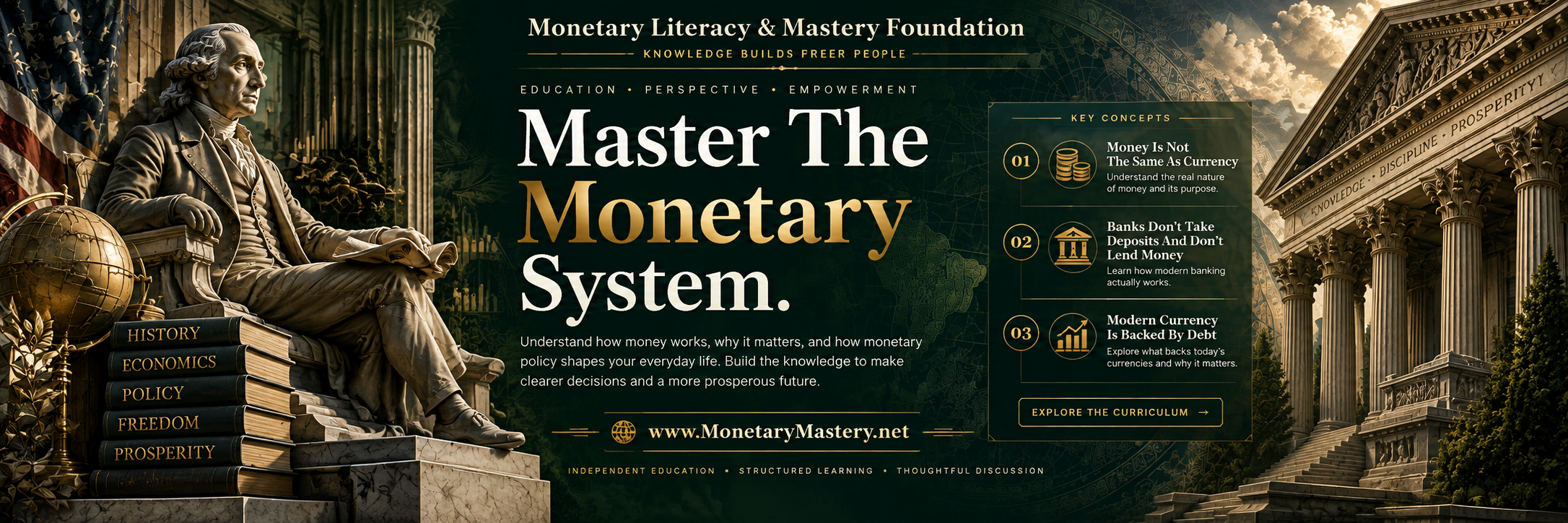
A New Home for the Monetary Literacy & Mastery FoundationThe Monetary Literacy & Mastery Foundation has a new front door.Our redesigned homepage was built around a simple goal: make it easier to understand what the Foundation is, why monetary literacy matters, and where to begin.The Foundati...

Read the full article →

6 replies 235 Read more →
G Gizmo ·Off-Topic ·1 month ago
Favorite Animal

Do you have a favorite animal? I love meerkats but I would love to one day own a French Bulldog.

2 replies 107 Read more →
W WatchMakingWebsite ·Creative Corner ·1 month ago
www.WatchMakingWebsite.com - Ecommerce/Community Forums (No Stock Yet)

Welcome to my Creative and Passion Project/Business

I Bring To You!

www . WatchMakingWebsite .com

and with it

www , WatchMakingWebsite . com / Forums

It’s only recent started I finished the foundation backend of the website code now i am still going over a few minor adjustment and errors so if you see anything do let me know ASAP!

With that being said God bless you and take care!

Maybe I see you around over at WatchMakingWebsite!

With warm humble Regards, Ricardo/Die.Hard/Duke

8 replies 233 Read more →
W WatchMakingWebsite ·Economic Roundtable ·1 month ago
Are We Entering a New Economic Era? Inflation, Interest Rates, Debt and the Future of Growth

For much of the period following the 2008 financial crisis, many advanced economies experienced unusually low interest rates, relatively modest inflation and cheap access to borrowing. Governments, companies, households and financial markets gradually adapted to that environment.

But what happens if that era is over?

This discussion asks whether the global economy is moving into a longer period where inflation is harder to control, interest rates remain structurally higher, government debt becomes more expensive to finance, and economic growth becomes increasingly difficult to sustain.

This matters far beyond financial markets.

Higher interest rates can affect mortgages, business investment, government budgets, employment, house prices, pensions, currencies and the cost of servicing national debt. At the same time, keeping rates too low for too long can create different risks, including renewed inflation, excessive borrowing and inflated asset prices.

The central question is therefore:

Can governments and central banks achieve sustainable economic growth while controlling inflation and managing historically large levels of debt?

Several forces deserve particular attention.

Inflation

Was the recent inflationary period primarily a temporary consequence of supply disruption, energy prices and extraordinary economic events, or have deeper structural changes made inflation more persistent?

Globalisation, ageing populations, labour shortages, energy transitions, geopolitical tensions and changing supply chains could all influence the future cost of goods and services.

Interest Rates

For years, businesses and consumers became accustomed to exceptionally cheap borrowing.

If borrowing costs remain higher than the levels seen during the 2010s, what happens to economies built around cheap credit?

Could higher rates encourage healthier capital allocation and saving, or could they suppress investment, housing activity and entrepreneurship?

Government Debt

Many governments carry substantially larger debt burdens than they did before the global financial crisis.

When interest rates rise, servicing that debt becomes more expensive.

That creates difficult choices between taxation, spending, borrowing and investment. Governments may increasingly have to decide whether resources should go towards public services and infrastructure or towards servicing existing debt.

2 replies 102 Read more →
MoneyMan ·Economic Roundtable ·1 month ago
The Overlooked Factor in Tax Revenue: Money Velocity

The Overlooked Factor in Tax Revenue: Money Velocity

The Overlooked Factor in Tax Revenue: Money Velocity

Money Velocity, Tax Rates, and Revenue: Why the Speed of Money Matters as Much as the RateMost discussions of tax policy treat revenue as a simple product of rates and a fixed base. Raise the rate, collect more money. Lower the rate, collect less. This arithmetic view is incomplete. Tax revenue is g...

Read the full article →

MoneyMan ·Economic Roundtable ·3 months ago
Peak Prosperity

Peak Prosperity

Peak Prosperity

View Link

Many people have asked us, “Where are the large-scale solutions to all the problems you have described?” and “What should we do as a nation to avoid the seemingly inevitable consequences of this fiat money system?”

We believe that we must reach a critical mass of individuals and ensure that they have an understanding of the ideas presented in the Crash Course, before any national or global solutions will even be possible.

Because we are still quite far from this tipping point of understanding, we must first focus on educating. Many people have already reached a place of understanding and assumed responsibility for their futures, but most have not. Once we have achieved a critical mass of people who understand the issues and have taken responsible actions as a result, solutions will find more fertile ground in which to take root.

3 replies 421 Read more →
H Henry ·Introductions ·3 months ago
Hello

Hi, everyone.

My name is Henry, and I am the latest member of this platform. I am a writer who's quite active on different platforms where I discuss different matters of interest with others.

In my spare time, I play video games, read financial magazines, and also talk a walk with my friends to the park. Those are the ways that I relax when I have not got a lot to do. I am happy to be a part of this community and look forward to enjoying my stay here.

Thank you.

4 replies 616 Read more →
G Gizmo ·Introductions ·1 month ago
Gizmo

Hey

It’s Gizmo. I am interested in learning more about currency and money so I thought I would join here. I already see some things are done different in the US than in New Zealand. 😮

Nice to be here.

3 replies 147 Read more →
Prospector49 ·Economic Roundtable ·2 months ago
Silver Will Rise Again

The earliest forms of money included salt and grain. Both were universally desirable.

But there were serious flaws with these “currencies”. Salt would dissolve in water. Grain spoiled.

And they weren’t valuable enough. So these items worked for crude barter, but that’s about it.

Around 5,000 years ago, when men began to mine and process metals, copper became money. Rings, bars, and even crude early coins.

Early on, copper was highly valuable because it could be made into knives, axes, and other tools.

In ancient China, governments even issued copper alloy knives as a form of currency. Talk about hard money…

Bronze, an alloy of mostly copper and tin, was a major tech breakthrough. It was sturdier than plain copper, making better tools, weapons, and armor.

For hundreds of years, copper and bronze ingots, coins, and bars were a common form of money.

But as mining activity increased, these metals became too common. The value was too low to carry much wealth around. You’d need a chest full of it to buy a cow.

Silver, a more rare metal, became the favored currency. It was the Goldilocks form of money. Not too rare, not too common. Just right.

And for most of the past 3,000 years, silver has been the world’s preferred form of money. With several interruptions, all of which proved to be temporary.

The Modern Gold Era

Gold has also been a form of money for thousands of years. But before industrial-scale mining, it was rare.

Only the wealthiest citizens would own a decent chunk of gold. This is even true today. Many regular people can’t afford to buy ounces of gold at $4,400 a pop.

Silver was (and is) the people’s money. It’s about 9x more common than gold. Still rare enough to be valuable, but common enough that most people can own some.

Throughout ancient history, the gold-to-silver ratio averaged around 10. Meaning gold was 10 times more valuable than silver.

Today, 1 ounce of gold is worth 67 ounces of silver. So silver is valued far lower than it was throughout history (compared with gold).

Silver has been de-monetized. Since 1965, it is no longer in our coins.

It is now a primarily industrial metal. Silver is the best electricity conductor on the planet. It also resists corrosion, making it critical for modern electronics.

The metal is particularly useful in solar panels, where it drives efficiency and long life. Solar power alone accounts for about 22% of total silver demand today. And industrial utility gives silver a lot of value by itself.

Today, gold is much more of a monetary asset than silver is. That’s primarily because central banks, like the Federal Reserve, still hold vast sums of gold as reserves.

But gold’s reign as the king of hard currency may not last forever…

Silver’s Inevitable Return

Since silver was de-monetized in 1965, it has been a rollercoaster of price action.

Throughout the 1960s, the U.S. government dumped their stockpile of silver at bargain basement prices.

The 1970s is when things got interesting. That was a period of inflation, slow growth, and financial chaos. It’s when the fiat (paper money) era began.

And periods like this are when silver shines.

Silver began 1970 trading around $1.80. By November 1971, it had fallen to $1.27. From there it went on one of the craziest bull runs in history, reaching nearly $50 in early 1980.

With high inflation throughout the 1970s, everyone looked for ways to preserve their wealth. For many people, silver fit the bill.

Yes, there was a sophisticated effort to “corner the silver market” by the Hunt Brothers, which helped drive up prices. Without them, silver wouldn’t have gotten close to $50. But the move would have been more durable. I wrote a letter on the Hunt Brothers and silver last year here.

The point is that when inflation gets nasty, ordinary people turn to silver for monetary salvation. It’s practically in our DNA.

A Silver Phoenix

Silver was the world’s favorite form of money for thousands of years. Today it’s still largely viewed as a monetary relic.

A metal that used to be money, but is now used for electronics. This will change once inflation rears its ugly head again, as we move further into the debt crisis.

People will seek out silver as an inflation hedge, store-of-value, and speculative asset. We’ve already seen hints of this, like during the silver price runup earlier this year. But that was just a hint of what’s ahead.

Because silver is primarily an industrial metal today, it is mostly priced according to that demand. Demand which is relatively predictable. Analysts model out industrial demand based on trends and surveys, and can get a pretty good idea about where the price should be headed.

But investment demand for silver is much harder to model. A full-on mania is impossible to accurately predict.

Only about 18% of silver purchased today is for investment purposes. Coins and bars. That’s why the metal is priced like an industrial input rather than a monetary asset.

But if investment demand creeps up to just 25%, that’d create fireworks. Like we saw briefly earlier this year, when silver ran from $35 to $115 in about 9 months.

And I suspect that silver will eventually make an even bigger return as the debt crisis progresses, and inflation worsens. As the world becomes more digital (and hackable), people will want a hard asset to store their wealth. And for many, gold’s out of the question. Too expensive.

Once again, silver will emerge as the metal of the people. A tool to help us preserve and grow our wealth.

Silver is currently trading at around $65 an ounce. I think that’s a fine price to buy at for long-term investors. It’s difficult to say what silver will do over the next 6 months, or even a year.

But over the next 5 years, I’m confident we’re headed much higher. And when silver inevitably goes through its next mania phase, I want plenty of exposure.

So I’m patiently holding. Waiting for the next mania phase.

The Hoover Dam Through a Garden Hose

And let’s not forget about silver miners. When the next mania phase hits, they are going to go ballistic. Check out the chart below, which shows the market cap of every silver miner ($66 billion) vs the value of big tech stocks.

As you can see, every silver miner in the world combined is worth just 1/80th of Nvidia (NVDA). So during a silver mania, a flood of money pours into a very small sector.

This reminds me of a quote from Doug Casey:

“The market capitalization of silver [miner] equities is insufficient to accommodate the inflows of capital from generalist investors when the precious metals narrative takes over.

When the generalist investors come in, the result is like trying to siphon the flow of the Hoover Dam through a garden hose.”

It’s a great reminder that silver, and the companies who mine it, are tiny. So when money rushes in, the results can be absolutely explosive.

https://dailyreckoning.com/silver-will-rise-again/

8 replies 421 Read more →
MoneyMan ·Economic Roundtable ·1 month ago
Roosevelt and Gold Robbery

Roosevelt and Gold Robbery

Roosevelt and Gold Robbery

Roosevelt stole all US citizens' savings in January 1934 with one simple trick.The Gold Reserve Act handed all gold held by the Federal Reserve to the Treasury, then let Roosevelt reprice gold from $20.67 to $35 per ounce by executive proclamation. That single move cut the dollar's gold content by 4...

Read the full article →

1 reply 114 Read more →
MoneyMan ·Financial News & Discussion ·1 month ago
The Coming Age of Permanent Inflation

Welcome back. Today I'm joined by Larry Leard, champion of sound money. Larry's the founder of Equity Management Associates and the author of the book Be Print. For years, he's been warning that America's mounting debt, chronic deficits are pushing us towards a point where the Fed's first job is not controlling inflation, is keeping the financial system afloat. Larry, it is great to have you.

Great to be back with you, Peter. I've always enjoyed our conversations.

So, let's begin with your book. What is the central argument of the big print?

So the thesis is that the way our financial system is constructed requires debt and monetary expansion to keep it going and grow. It's kind of like a shark. It has to go forward or else it's not going to it won't get oxygen going through its u its gills. And um as a result of that, you know, the the um and that's based on the way money is created, which is kind of a long story and the book lays it out, but basically banks lend money into existence. And by lending money into existence, that means you're creating additional debt whenever, you know, you're you're growing your economy. And that's you know, Reagan really kind of started this uh you know, with the notion that we could take on debt, use it to grow the economy. And in the certain measure, there's some sense to that, but when it gets too far down the road, it becomes problematic. And the problem occurs when the debt gets so large and the growth in the economy doesn't match the growth in the debt. There becomes a big gap which is to say that the you know and there's a chart I used to put up on Twitter and X all the time that showed kind of the growth of the debt burden and the growth of GDP and they were diverging. And so yeah

what when that divergence occurs what happens is that something will break on the debt side and um and then the government will have to step in and print money to create more money to service that excessive debt. And we've had a lot of these breaks throughout history. I mean, you know, and these are really kind of credit bubbles that burst. You know, debt debt fuels growth gets too far ahead of the economy, it bursts, and then the economy collapses unless enough money is printed. And the first example that was actually 1929 where there was a lot of leverage and that stock market crash. But we've had other examples since then. The two more recent ones are really um 2008 and then the COVID example. And uh so in 2008 we as we all know we had a housing bubble and the debt just got so large it couldn't be supported and we woke up one morning and the entire economy was going to collapse and secretary of the treasury was uh begging you know the speaker of the house to you know give him $700 billion or else the ATMs weren't going to work and so um that I call that the first big print uh and of course they went from you know 700 billion to multiple trillion over a series of years and and you know this in doing so what government is effectively doing is they're backstopping the banks. They're putting money into in bank reserves and increasing the monetary base. And that's that's good in so far as it does stop a collapse of an overlevered system, but it's bad because all that additional money eventually works its way through the system and creates inflation, right? And so, you know, the first one was was was uh 2008 and then in COVID we did the same thing, but we did it on steroids. I mean, it was even bigger and faster. And so what my book argues is that these are a feature of the system. This is not a bug, it's a feature. And we're going to have another one [laughter] because we're going to get all levered up again and then something's going to break and then the government's going to have to come in and print a ton of money. And so we now, you know, we've now got two examples of it. So we can see that it's a pattern and we we I believe it's going to happen again. And the implication is of course that then you have to you have to try and earn forms of money that the government can't print or or hold I should say save in forms of money the government can't print. Um the natural ones in my mind are silver, gold, and bitcoin. So that's the that's the overall thesis.

Yeah, I've argued um you know I've got a bunch of articles talking about you know whether we should replace the Fed and of course we should but with what?

And the question is always what does the Fed do? And in most people's minds, it fights inflation,

right?

Right. Like usually when you read about the Fed in the newspaper, it's talking about how, you know, inflation is getting, you know, whatever. It's it's too high. And so the Fed is going to do this and that to fight it. And so I think that most voters in their minds, uh, the Fed fights inflation. In fact, there was a study of that and they found twothirds of voters think that the main purpose of the Fed is fighting inflation which is hilarious because we didn't have a Fed for the first what 130 years

right

and we had zero aggregate inflation correct

until we had a Fed so if it doesn't fight inflation what does it do and I think the answer is the main purpose of the Fed is the bailouts I think people underestimate they see the bailouts right so it was you know whatever it was in 2008 2.3 three or 2.7 of which much was allegedly paid back. Of course, there's risk adjusted and, you know, it's a transfer at the end of the day, but that's not the real, you know, goal here for Wall Street, right? The real goal is the year-to-year money printing,

correct?

That, you know, people see 2% uh inflation, but once you include, you know, productivity growth, population growth, uh usage of dollars overseas, right? Once you include all that, you're probably talking closer to 5% money printing, which is what on the order of 1 and a.5 trillion. So, most of which is captured by Wall Street. So, it's not the 2.7 trillion bailouts every, you know, 20 years. It's the trillion and a half every single year. That's what the bailout mechanism is. And that's the function.

I mean, to your to your point, there's a very interesting statistic. since 71 the money supply M2 you know I I kind of measure I'm a monitorist in and Austrian and my economic views and that means that I kind of measure you know the um inflation in terms of how much the money supply grows the broadest measure today of money supply is M2 and if you look at it from 71 it's grown in the high seven seven digit 7 point something area like call it 7.6 six or 7.7. So, you know, the government I think over that same time frame has said we've had inflation of two or 3% on average and they're just they're cooking the numbers. And so, you know, and I I think the 7% is much more in line with what the average, you know, person has experienced. I mean, if for example, you look at housing prices or price of a lot of things that are kind of stable, you know, more stable, they've grown at some percent compounded for years and years. So,

yeah. Well, and you know the gap between those that people don't take account of is that essentially all of the productivity gains since call it 1971 you know so China uh crashing manufacturing costs the stupid software thing the impact of the internet of software of container shipping right there have been all of these advances in technology that should have lowered crisis.

Correct.

Right. If we look back to the late 1800s, which was a, you know, that was also a period of enormous technological gain. Uh, the so-called Great Depression in the 1870s, which was actually economically fantastic, but prices went down. That's what depression used to mean. That's

right.

And we didn't see any of that over these past 50 years. We didn't see anything from China. The average American does not appreciate. They think China just stole the jobs. They don't understand China also slashed the real cost of manufactured goods. And the reason people don't see that is because all of it was gobbled up in money printing

correct

yeartoear as you say I think if you take the aggregate number the change in M2 since Nixon killed off the gold standard in 71 I think you're looking at what I think it's around about a trillion or more than a trillion a year. Of course that's that's that's compounded. So at this point it's probably about a trillion and a half or north of that in money printing every year. People don't understand what a massive swindle this is, right? This is not learing centers 20 million at a time, right? This is this is enormous sums of money being siphoned out of the pocket of every, you know, dollar holder, every pensioner, uh, anybody on a fixed income, anybody with a contract that, you know, that has nominal prices, which is almost everybody. Well, and that's the thing, Peter, that I think most of the world doesn't understand. I tried to address this a little bit in my book, and Austrian economists do understand is that over time, the natural course of prices is they should fall as mankind becomes more efficient and smarter and we do things better, cheaper, faster. And I mean, you can actually see that very well in an area that we're all very familiar with, which is electronics and technology. I mean, remember what you paid for your first huge flat screen TV and remember the quality of it? you know, it was thousands of dollars and it was much lower quality than today. And you can buy the same TV today for, you know, a fraction of that and it's higher quality. So, [snorts] [laughter] excuse me. That's the kind of thing that could be and should be happening in all areas. Not not entirely because some things are it's hard to make certain processes more efficient. But, as you pointed out, I mean, there have been things like the China price or or even oil. Finding oil has gotten cheaper um as a result of fracking. Do you know what I mean? and the technology to to locate oil deposits has gotten better. So, so yes, we should be living much better lives than we're living. And everyone thinks, "Oh, isn't this great? We've got all this technology. We're living pretty well." But a lot of it has been stolen and rad by the people at the top who, you know, benefit from this system. I mean there's a whole there's a term we have for called canillionaires which are basically people who know how to borrow cheaply and invest in things that are going to work and grow and you know they they get ahead and so that's why we have such enormous wealth concentration at the top whereas the average citizen is they're only four s they have two sources of borrowing one is against their house and that's a good asset and they can generally borrow at 6 7 8% or you know lower at some points in time but their second source of borrowing is a credit card and that's basically usery, you know, the credit card companies are all between 18 and 30%. So, you can't borrow at 18 30% invested things and get ahead. That's pretty hard to do. So,

um yet if you're on Wall Street, you know, you can borrow at the Fed funds rate and of course they do. So, so yeah, it's a very unfair system. It's very broken. Now the so Kevin Walsh one of the things that he he's talked about uh even before becoming Fed chair was this idea that artificial intelligence is going to be massively deflationary

right

and so that's going to create the you know

the space to cut to cut rates

space to cut rates so I guess the first question is do you think that's going to happen uh you know given all of the equities that Kevin Walsh has to deal with at this point. Number two, if it does, are we going to see a giant everything bubble? Everything is going to go up again. It's going to be like CO squared.

Yeah. Well, there's a lot in there. Um, look, I I think AI is real and I think AI is going to increase overall general human productivity. There's no doubt about it. I've experienced it myself. We've all experienced I have people who are friends who are parallegals and and so forth. I mean you can just do you know it's a great a is a great tool and you can do more better cheaper faster just like the spreadsheet was a great tool and the internet was a great tool and email is a great tool these are all things that improve productivity and so that's that's a positive is it going to completely solve the problem the way that worst describes it happen instantly and we've got this enormous boost in productivity that therefore you know prevents inflation I I don't buy that I think that's all that's a dream that's like doge is going to cut a trillion dollars out of the budget which never happen. Um, you know, it's a nice it's a nice fairy tale to talk about, but it's not realistic if you actually examine the numbers. I mean, you know, we have to basically grow this economy very rapidly or else the debt is going to overwhelm us. And the only way historically to do that is to have a lot of inflation. I mean, they did it after World War II. You know, the the thing that's interesting now is that debt to GDP now is in the 124% range and after World War II is very similar. It's about 114% range. And basically the way we got out of that after World War II was we grew we grew the economy like crazy. I mean we went from producing a million cars a year to producing 5 million. We went from you know uh 200,000 housing starts to millions of housing starts. And so you know that that kind of and and that was all good and that it it allowed us to grow the economy and reduce the size of the debt relative to the economy. The other thing they did is they balanced the budget and so the debt didn't get any bigger. I mean that got very big when they were fighting World War II but then it didn't get any bigger. Here's the thing that's important to notice is that in that period where we were growing, inflation was really high throughout the 40s and 50s, there was one year in 1952, inflation was 18% a year.

So, you know, the whole I mean, but Santa has been out there saying we're we got to grow our way out of this debt burden. And he's right. I mean, in a sense, he's right, but guess what? You can't do that without having inflation. [laughter] You know, you just can't because because you can't get 18% productivity improvement. It's just not going to happen that quickly. You're going to get some but not that much. Right.

Right. Well, the Doge example is nice uh because in theory so you know Singapore for example kept growing at 6 7% even after it was a rich country. However, if you look at the, you know, package of taxes, regulation, uh, frankly, government involvement, you know, Singapore comes in and like proactively seeks out startups and say, "How can we help you?"

Right.

Um, like what we do with, you know, people on welfare, Singapore does with startups. Right.

Right.

So, like it it, you know, like with Doge, it's a great idea to slash a trillion dollars. Yes, we should absolutely do that. What are the odds? Similarly, it's a great idea to grow at 67% like Singapore. What would it take to get from here to there? We're sitting here right now. You know, Bernie Sanders wants to ban AI. Like,

the, you know, central debate points for us on economic policy are nowhere close to where they

Well, [laughter] that's, you know,

that's right. I mean, we don't have the kind of industrial policy necessary to to drive that growth. But but you know to be fair I mean I'm I'm very supportive of growing. I mean growth is a good thing. I just think it's going to be inflationary growth and it has to be inflationary growth and that that's probably the least painful way out of this thing. I mean the other the other way to solve it would be to just let it all collapse and you know that's a a 1929 kind of scenario and and that's very destructive and a lot of people suffer in that. There's no point in doing that. So, I I think that, you know, the and really the the correct solution, Peter, I mean, I talk about this in the book, is is a one-time monetary reset where we say, "Look, we've been living off our, you know, debt too long. We need to return to sound money, and here's how we're going to do it." Now, that would have a certain very, you know, it'd be like tearing off a band-aid. It would hurt. But if we then return to a sound money standard, um, things would rearrange themselves very quickly and we'd be off to, you know, very non-inflationary growth, which would be a great thing. Um but the you know the debt means that we've got to continue growing. And the other thing that's just really disappointing is the lack of will to address the deficits. I mean

just this weekend I read you know that um another party had come out and said that if we don't spend 1.5 trillion in defense you know we're going to lose the we're going to lose the Middle East. Well you know one I'm not even sure that's true. But two you know where are we going to get the 15 trillion? I mean we're already spending 800 billion. So that's add another 700 billion and we're running a deficit of north of two trillion a year, you know, and and theoretically in a full employment or relatively full employment economy where the record high stock prices. I mean, you know, imagine if one of those things changes. Imagine if the stock market turns down or we get a business downturn, the deficits are going to get even larger. So all of these things in a big picture sense are what I call the symptoms of a sovereign debt crisis. And the United States is behaving in a way that in histo in history was much more common among smaller and emerging countries which is they spend more than they have. They borrow to do it. Eventually they can't make the debt payments and the interest payments. They print the money to do it. People realize they're printing the money to do it. They abandon the currency and the currency has super high rates of inflation and or potentially even it fails. And all of those things are now kind of occurring. And and we saw that we've seen this in Venezuela, Ecuador, Wymer, Germany, you know, Zimbabwe. I mean, there hundreds hundred examples of it. I I lay them out in the book. And and as a result of that, that's I think we're doing the same things in the United States. Now, we happen to be the biggest country with, you know, the biggest military and we're kind of the reserve currency still, even though we've lost some of that. And uh so it's going to take a little bit longer and it's not like we're going to fail overnight, but if you do the same things, you're going to get somewhat like the same results. And I think at a minimum it means we're going to get very high inflation. And you're really seeing that now. I mean look at look at the diesel pricing. You know look at the I mean at you know I mean wars came in and he was talking about how he wanted to shrink the balance sheet and he thought we could cut interest rates because of this AI productivity miracle. And of course now all the numbers have gone against him. And so he's faced with a very difficult decision. I mean this week they have a Fed meeting.

And I think the market is saying it's like an 80 or 90% chance he's going to hike. And maybe he will. I don't know. I I I actually don't think he will. I think he'll try and find some excuse not to, but but maybe he will. Um, and uh, you know, it's it's a problem. I mean, this inflation, they're not going to slay this inflation beast easily. Once it gets started, this is like the 70s. Uh, it tends to each wave tends to get bigger. So, if you own gold, and many of you do, you already understand how it protects your wealth from the insanity coming out of Washington, the inflation, the recessions, the wars. But with monetary medals, there's a way to actually earn a yield of up to 4% on your gold, paid in more ounces of gold. You retain ownership of real allocated physical gold with no storage costs while your ounces grow every month outside the banking system. If you're serious about protecting your future and building your legacy, head to monetarymetals.com/per to get started. Now, back to the show. Yeah. Before Walsh came in, uh, he was t he'd actually been talking for years about this. He calls it Robin Hood monetary policy,

right,

where they can cut rates because they're going to sell down the Fed's balance sheet, which is the stash of money the Fed's accumulated by printing money in the past. And it's

right

something like six trillion or 7 trillion.

Yeah. Yeah. 6 and a half trillion I think the balance sheet is today roughly. Yeah.

Six six and a half trillion. And so if you do that then it cancels the dollars and then in theory you can let the real economy rip with low interest rates and that's going to be soaked up by the balance sheet roll off. And I think it was about 3 or 4 months ago where they started I can't remember the mechanism you probably know this better uh but they got kind of a scare out of financial markets sort of a a uh echo of the so-called taper tantrum where essentially you know markets were seemingly unable to digest the reduction of the Fed balance sheet and so they they pivoted back to so-called not QE in other words

they call They call it reserve management and it happened in December when Powell was still Fed chair

and they said it wasn't QE and it wasn't money printing both of which are technically lies but um and and and yes so they so they did start printing money and they are printing money now admittedly not at big print like rates I mean this is I I call this right now we're kind of in small print land and then they're doing some other things around the margin which I'm sure you and your listeners have been familiar with which is to say Treasury Secretary Bassant who used a lot of money to sold a lot of bills to build up the Treasury General account has been using that account to buy back um longer term bonds because you know the real so the trigger here just for everybody to understand this is we're in potentially we're in kind of a debt doom loop where um just describe that quickly. Government runs a deficit. They have to finance the deficit by selling debt. That's more debt into a fixed number of debt buyers, which means the interest rate goes up to get that debt sold, which then and by the way, the US government's one of the largest payers of interest in the world. We pay $1.3 trillion a year in interest on our 40 trillion of debt. And so that that then gets larger. You know, the the interest payments get larger if the rate goes up. So then the deficit gets bigger. So then we got to sell more debt. You see where I'm going with this? It's a we call it a doom loop. It's recursive. And you know, it just the more interest rates go up, the bigger the deficit gets. The bigger the deficit gets, the more debt you got to sell. So, so that's the risk that they're facing and they know it. And um historically, because they've acted aggressively several times to prevent it, the real trigger rate is to see the US 10-year bond yield go through 5%. And as I look at it right now, we're almost there. In fact, we might be there this morning. We're 4.98 this morning. So, we're right on the edge of that. and um you know and and so what Bent has been doing is he's been buying back bonds to try to keep that rate from going out of control but I I'm not sure he's going to be successful. Right?

So in the late 1990s uh the tenure was running about 7%

right

in the 1980s the early 80s was running 12 a.5. Now, that was the overhang coming off the 1970s. But just taking the late 90s, why could we digest 7% in the '9s because that was the miracle economy, right? Everybody was excited. That was the dot era. That was Bill Clinton, new Gingrich.

It's a great question, a great point. The biggest the biggest difference is that we weren't running the huge deficits, Peter, and we didn't have the debt to GDP that we have now.

Yeah.

I mean, when Paul Vulkar came in, so so we had an inflation. We went off the let's just to recoup the big picture. We went off the gold standard in 71 and people started losing confidence in the dollar and they were buying gold. So gold went from 22 to $800 in the course of the decade of the 70s. It was very inflationary. Debt to GDP at the time was in the mid30 range like I think it was like 38%. Paul Vulker said look I know how to solve this problem. We're going to jack interest rates up to 20%. and we're going to create an enormous positive, you know, interest rate on the bonds and people will buy these bonds. Um, and we will we will put we will stop inflation and moni, you know, the money supply growth debt in its tracks. And he did and they could do it because the numbers the balance sheet numbers allowed that. Okay. Um, the balance sheet then, you know, came down as a percentage for some time because we really didn't run that big of deficits, you know, post that time frame. Um, and then Reagan came along and he started running deficits, but they in today's terms they're quaint. They were like, you know, hundred billion or something. I mean, we're running$ two trillion dollar deficits. I remember when Reagan's deficits first were announced, I think his first one was like 180 trillion or some billion. And everyone was like up in arms. We can't run a deficit that big. It's enormous. And now, of course, it seems quaint. Um, but you know, and in the Clinton era actually, if you recall, and it was somewhat based on accounting ledger demand, if you recall, there was actually a year where we ran a surplus. So, um, part of the reason we could do it was the debt burden wasn't so large and the and the the fiscal dominance, which is, you know, a term we can define in a minute, wasn't as present. We weren't as as monetarily out of control. And and that's really the core of the problem. I mean, yes, having a lot of debt is a bad thing, but hey, Japan's had a lot of debt for 20 or 30 years, and people said, Japan's going to collapse, right? Well, yes, but they also had a ton of savers, and they weren't running huge deficits. So, you know, the difference here is that our deficit's what's really doing us in. And and that's why when I talk to people who are looking at investing my fund, I always say that, you know, they say, "Well, what could go wrong? How do we not make money in this investment, Larry?" And I'd say, "Well, we don't make money if the government gets responsible." Of course, they always laugh, right? Because we all know that the odds of that are pretty low. But, you know, look, I mean, my investment thesis would be severely tested if the government started to get serious about balancing the budget. I mean, the reason that the reason they have to keep printing the money is that they they keep spending more than they're bringing in and issuing debt to do it. And so that's that's the real core of the problem, right? All right. So, explain fiscal dominance. So, traditionally, the alleged purpose of the Fed was to manipulate interest rates in order to get the Goldilocks economy with just enough growth and just enough inflation. you've argued and I think it's a you make a great case that the Fed is no longer that's no longer the predominant uh goal, right? Uh you know they're not they're not trying to walk the line between growth headlines and inflation headlines rather at this point their main goal is fiscal dominance. So explain what that is and how the chang.

So the Fed has had a lot of mandates if you recall when it was set up in 1913. It was set up because of the panic in 1907 when JP Morgan bailed out the banking system. And what the bankers at the time realized is that if we could get the federal government to back our play um every time we got out over our skis, they would print the money to protect us and we wouldn't go bankrupt. And so so that was the initial reason behind the Fed. you know to have a we need a permanent backs stop to secure the financial system. So that was there for quite some time. In the 70s the Fed charter got amended to focus on um you know full employment and um you know low inflation or monetary stability. Um and that that third item wasn't really talked about very much but we know it's there and I call it the Fed put. um which is yeah we want to have as you say we want to have monetary um we want to have a balanced monetary system but but if something breaks they're there um and and so what happens is once you get into fiscal dominance the the Fed really what they do really can't control things that much and by fiscal dominance I mean the point where they are spending more money than they are bringing in and the market is starting to trade interest rates and stocks and bonds and gold and and Bitcoin and all more on is this government creditworthy rather than does this interest rate compensate me for my risk. Um and and the fact of the matter is that the government the market is coming to see that they're not getting compensated for the risk. The bond market is the sucker at the table. I mean it's amazing how how much bonds have gone down in gold terms since you know we started running these huge deficits. I mean they've just been getting killed. And that goes back to my point about we we're in a sovereign debt crisis. So the history of the Fed is that when a bubble burst, they reinflate it. You know, when the.com bubble burst, I remember very clearly Greenspan saying, you know, we need to get a housing bubble going. You know, and he even advised people, go out and take out a heliloc against your house, borrow against your house. And so they got the economy going after the collapse of the dotcom bubble. And then the.com bubble burst and they took interest rates down to zero again. And they were like, well, we, you know, we got to get the economy going again. And they held him there for a long time. I mean, 0% interest rates is just an outright crime. I mean, it's a crime against capitalism to have money have no value. It implies the money is worthless, which kind of is, but um and so basically what then happened is, you know, now we've blown a bubble at the next level up. So each level, you know, with with stocks burst, we we we printed a housing bubble. Housing bubble burst, we printed a a bubble in kind of everything. COVID came along and now we're you know and that at that point in time they really took the gloves off as you know they sent out checks they handed money to you know to companies um that they didn't have to pay back. I mean, they just really let the printing rest run wild and it was, you know, it was over $5 trillion worth of stimulus. And so, you know, now what they've done is they they've called into question, you know, is the currency itself worthless. I mean, they they've always said, don't worry, you know, we Bernaki said, we we have a technology of printing press. We are not going to let deflation happen here. Even though deflation is good and natural and we want deflation, they've said they've determined that it's not good because they're Keynesians. Fine. So, if they're not going to let deflation happen, we know that at the end of the day, if things start to go sour, they're going to print more money. And the math of the situation is such that they're going to have to print a ton of money, which is why I named my book The Big Print. It's not going to be a little one. Each one's gotten bigger. I mean, in the [laughter] in the '08 example, they printed, I don't know, $3 trillion over four or five years. I mean, that was QE1 and two and QE Infinity and Bernaki. And I I remember Bernaki telling Ron Paul, "Oh, yeah, you know, the balance sheet is 1 point some trillion. We'll bring it back down." Well, They went to three, you know, and then in the COVID one, they took it from three to nine at one point. They brought it back down to six something. But um and the point is with each one of these, it gets bigger. Has to get bigger because of the way the debts compounding. So, you know, another one of these events is coming. Uh we don't know when. Um but I've never been more certain of anything because of the math. So, that's why, you know, it's just it's absolutely essential. So, I think the average person um is aware of this issue and has a piece of their savings in money that can't be printed.

A word from our sponsor. No amount of time spent learning about macroeconomics or politics can save you from the fact that our money is broken. You can protect yourself by taking full control and holding Bitcoin in 100% self-custody. Now, there's a learning curve, but it's not rocket science, and you'll be in expert hands with my friends at the Bitcoin way. They'll guide you through the process step by step from setting up your hardware wallet to running your own node one-on-one and at your pace. Download your free self-custody guide from the Bitcoin way by scanning the QR code or clicking the link below. The time to become sovereign over your wealth is now. Stocks and even gold are all over the place. If you're ready to diversify abundant mines makes Bitcoin mining simple, transparent, and human, you can deduct every penny thanks to Trump's big beautiful bill. It's a 401k for Bitcoin mining. Founded by husband and wife team Bo and Christine Marie Turner after losing half a million dollars to broken promises in the mining industry, Abundant Mines was built to protect investors. You own the machines. They make it turnkey with hosting at their facilities in Oregon. Pricing is clear with one flat monthly fee and no surprises. And they guarantee uptime so you can keep earning day in and day out. If you want easy diversification without pressure, learn more at abundantminds.com/peter to get some of your first Bitcoin mind for free as a gift to my audience. Now back to the show.

So walk us through what you think is coming next here. One of the key questions I want you to kind of put in the sequence is

timing

the next recession. So since the Fed has been created, we have recessions almost like clockwork.

That's because of the Fed's monetary manipulation. It makes rates too low and then it hikes them too high.

We're at the potentially too high stage at this point. But walk through so what happens first?

Uh is a recession necessary for that sort of doom sequence to start? It's a great It's a great question. I I don't know because we're kind of in uncharted territory. I mean,

we could just go right into what Austrian economists call a crackup boom where they just everything keeps going up,

but the inflation gets worse and worse and worse and, you know, the um we don't head towards hyperinflation, but we head towards very high inflation. Um I think that, you know, my sense is that right now real interest rates are pretty negative. um you know, inflation by my calculations, even though they reported at three or four, I think it's running closer to seven or 8%. And so, you know, if that's the case in a 10-year time frame, why would you want to own a bond that's paying you four or 5%. You wouldn't. Um, and so I I think what's going to happen is the bond market's going to be the trigger for it. And it's actually happening right now. I just looked, the 10ear actually just went through 5%. And so, you know, that's in my view eventually what's going to happen is the government is going to be forced to step in and put in what we call yield curve control, which is they're going to say, "We stand ready to buy all these bonds at 5%." And by the way, they did this in World War II. This is not something new. I mean, when they were financing World War II, they knew they were going to have to sell a ton of bonds. And they knew that if interest rates went up, that was going to be a real problem because the cost of those servicing those bonds was going to make the problem bigger. So, what did they do? They said, "Okay, short-term rates are 38 of a percent and long-term rates are 2.5%." And we stand ready to buy everything at those prices. And my sense is that's probably what's going to happen here. And when they do that, you know, the bond market's going to look at the Fed and go, "Sold to you." And so the Fed balance sheet is going to go from 6 trillion to 20 trillion. And you know, you might ask, well, okay, the bond market comes to the Fed and says, "I want to sell my bond to you because I don't like this 5% anymore." Where's the Fed going to get the money to buy that bond? Easy. They're going to print it. They're going to issue a reserve to a bank and the bank's going to buy it. Um, and so that's going to grow M2 again and the money supply is going to explode upward. And so so they will keep the system running. Um, but it will be very very inflationary, Peter. And does does it mean, you know, do we have a recession? Does the stock market go down? I don't know. Stock market's pretty overvalued. Um, but that doesn't mean it has to go down. I mean, I I've said in my letters, and I believe truly that what they're going to try probably try and do is a run it hot strategy, which is to say, I mean, if you know, okay, inflation's eating you alive, but hey, you all have jobs and the economy is still running and the stock market's making record highs in nominal terms, not in gold terms, not in Bitcoin terms, but in nominal terms. And so, my suspicion is we kind of tend towards that side of things. But, you know, along the way here, if anything goes wrong and we do have, you know, an economic downturn or something breaks, I mean, candidates for that are commercial real estate and private credit and the insurance companies and there a lot of different areas where they're a

AI debt probably.

Yeah, AI debt. I didn't thought about that one, right? I mean, got all these companies taking on enormous AI debt and now we discover the Chinese are offering the same thing for a fraction of the cost, right? And of course, you're already seeing the AI guys starting to position for how the government's going to save them or bail them out, right? I mean, it's just

it's it's just it's horrible. And so, you know, look, it it we don't know exactly how it's going to pull. We don't know the time frame, but I will make two predictions. I've said many times other podcasts, I think we're coming to a head in the next 12 months. I mean, this kind of feels to me like 20 2007. You know, some of the things that have happened, you know, with the with the, you know, the private credit guys gating their investors, etc. These kind of remind me a little bit of summer of 2007 when the the Bear Stern CRS CRS funds failed or CDE funds failed and and so if you think about summer of 7 2007 we didn't actually get the crack up until September of '08. So, you know, I kind of feel like in the next year this going to become a real problem and they're going to have to do something like yield curve control or drop interest rates substantially. I mean one way by the way you know if you think about the US government deficit right we're running a $2 trillion deficit u but you know say a trillion of that round numbers is interest expense well how do you solve that you take interest rates down to zero and you're not paying anything on your bonds you know your your deficit gets reduced and so your interest expense is much lower now in turn you know the bond market then the bond market really revolts you know what are you kidding me you know you're you're printing money and you're you know you're doing something that's massively inflationary Because don't you know don't get me wrong reducing interest rates will create borrowing which will create M2 which will lead to inflation. So if we go down that direction fine um but it's going to be massively inflationary right and so so I think within the next year it's going to come to I think within you know longer term I think within you know call it six or seven years there's a good chance the whole monetary system fails or we have to have a reset which is to say you know inflation's incredibly high it's persistent um and maybe we elect some politicians you know um like you know Thomas Massie or Warren Davidson who say Hey, we got to return to sound money. Um, so I I kind of that's that's the longer term view, but but we're not there yet. Um, you know, we're not even close to being there yet. I think I think we're at the stage where most of the world knows that inflation's a problem. Um, and I think we're in the stage where maybe 10 or 20% of the world has a sense of how to address it, which is, you know, real estate, gold, silver, and Bitcoin. But I think we're, you know, we still got 80 or 90% of the country that really doesn't understand why we've got inflation. and they and they tend to believe the Fed narrative that oh well don't worry the Fed will hike rates and we'll get this all back under control again when mathematically that's just not possible. That's the whole thing is this isn't really this isn't a valuebased judgment. It's actually based on the math you know.

Yeah. I think uh definitely uh Wall Street people at large are sort of assuming maybe they don't realize it but they're assuming that the Vulkar solution you know jacking rates up that can fix it. Don't worry about it. there's a solution to it. And as you said earlier, you know, the debt as a percent of GDP is more than three times higher than it was when Vulkar worked his magic.

Uh you [laughter] there aren't enough dollars uh to hike it to 20%. Like if you did 20%, right? If you had 20% rates at this point on 40 trillion of government debt, the government debt alone would be 8 trillion in interest expense. Right.

I think they collect something like six trillion.

Yeah, that's right.

And and then you know there's a lot of things to buy like trillion and a half defense budget. So I mean that would be enormous.

So if you just take the gap on that you're talking 7 trillion let's say.

Yeah.

And the entire money supply is 20 trillion. So that would be just naive math. 35% inflation per year.

You're absolutely right. It it just but the bottom line Peters it just doesn't work. It just mathematically doesn't work. And it's it's kind of stunning to me how obtuse so many people are that they just don't see this because it's just sitting there in plain sight. It really I mean you just laid it out very very well. I mean it it's it's sitting there in plain sight. I mean if they actually hike interest rates that's going to make it worse. Now maybe tomorrow, you know, this week he's going to there's a Fed meeting at this week. I think it's on the 16th. Maybe he's going to hike rates 25%. Maybe he's going to hike them 50%. who the hell knows and trying to establish himself as a as a inflation fighter. If he goes down that road at some point something's going to break and you know and and it's possible that that's their strategy, you know, to to hike rates, have things break, have the market break, have everything break, and then come in as the firefighter and drop rates quickly. I mean, this is what they've done in the past and and try to save everything. But in my view, that's kind of a stupid strategy. um you know, they'd be much better off to cut rates now and say, you know, we're going to let inflation run hot. Um you know, nobody likes that, but everyone will at least keep their jobs. We'll keep the economy moving forward. I mean, obviously everything will get more expensive and those on fixed incomes are going to get crushed. But um I mean the re, you know, look, the real the real solution here is to do a one-time monetary reset, but [laughter] excuse me, there's no political will for that from what I can see. So

yeah, I mean generally historically it takes a crisis to get there and for better or worse we're not at a crisis and if we were at a crisis that's not necessarily a good thing for the accelerationists out there. If we look at every crisis in American history, uh you could argue Andrew Jackson was a crisis that made things better. He got rid of the Fed,

the precursor to the Fed. Every other crisis has made things substantially worse. Right? This is the crisis and leviathon ratchet book by Bob Higgs.

Y

you know every war, every 2008, every COVID, we don't come out the other end of it purified.

No,

leaner and meaner. Well, no, but but but having said that, there are cycles and you know, if you um you know, look, I mean, what Vulkar did was extremely painful, but then he did pave the way for a bunch of years of falling inflation and and generally um healthy economic growth. I mean, it would have been better if we'd been on sound money to begin with and, you know, a lot of that um, you know, the productivity increases that we enjoyed would have flown through to people, but but they kind of had it all in balance back then to some degree. Um, you know, and and that's why I mean, I think a lot of people out there are missing the fact that this is the kind of thing you got to look at in hundredyear cycles. I mean, the last we're in a sovereign debt crisis. The last sovereign debt crisis was World War I. you know, when basically the cost of the war forced all the European countries to go off the gold standard. Um, you know, and so, um, that's the model. Um, and nobody was around then is alive today. So, um, you know, everybody's using the old playbook, which is, yeah, the Fed will raise rates and we'll get inflation under control. We'll go back to it all being normal and the stock market will go on to make new highs because, hey, you know, buying the dip has worked since 1980. and it has, you know, generally uh but I I'm not so sure it's gonna continue to work. [laughter] I'll take the other side of that bet.

All right. So, speaking of which, last question here.

Yeah.

How should an ordinary American like what should they own? And a key point here, I think you're familiar with the book When Money Died. Yeah.

By uh

very good book. Yeah.

Yep. By Ferguson. and he talks about the VIAR uh episode of hyperinflation and one of the points that struck me in that book is that early on in VHimar stock markets reflect the future right and so when the hyperinflation started coming in stocks responded to it first

yeah so in terms of how people should position themselves I mean the point I make to most people I think is that um you know if you have savings um I mean and by the way if you know, if you're young and you don't have a lot of savings, I mean, it's u this is less relevant. And whatever the new money is going to be, you're going to you got your whole career in front of you to make money. But, um, the point is if you're older and you have savings, it's generally important to hold on to those savings because in your later years, you're not going to have as much earnings power and you want to have, you know, be able to live, okay? Um, and and I guess the point I try to make is that we clearly live in a period of monetary debasement and we clearly live in a period where inflation is going to be a problem. And the the best traditional protection against inflation are to own things the government can't print. So real estate qualifies, but the negative there is you've got t taxes and maintenance and a lot of issues and some areas are a bubble. So, you know, real estate's I think a poor substitute. I think probably the best pure play qualifier is gold. Um and then if you want something that's got more alpha to it and obviously has a lot more volatility, Bitcoin, uh in my opinion is great as well. My book talks about both of those. um silver works too. Um you know because these are these are forms of money that cannot be printed and I think they have you know although they've gone up a fair amount in the last year or two I think they have much much further to go as you know the governments continue to debase the currency. how you know what what you should be looking out for is if if that changes then you know maybe lighten up and and like all investments the way to deal with this I mean I happen to be about 100% in on both of these two assets but I'm a professional and I can do that um you know given my circumstance I think that most people um you know I think a lot of people just have their IRA or their 401ks in the stock market and I think the stock market is very pricey I'm not saying it's going down but I don't think it offers the riskreward benefits that gold than Bitcoin do. And I often say to people, if you don't have 20% or 30% of your savings in something that protects you from this inflation, I think in five or 10 years, you're going to have regret. Um, and and by the way, stocks kind of protect you from inflation because they, you know, they're they're productive enterprises that will go up in value over time. But traditionally, in highly inflationary periods, stocks have been kind of, you know, subpar. Like take the 70s as the last big inflationary period. stocks were kind of flat to slightly up over the whole 10-year period, whereas gold was up, you know, gold and oil, the two major commodities, were up 30% a year, compounded for 10 years. I mean, it was enormous. And I think that's the kind of environment we're going into, an inflationary environment. So, I think that people need to make a make a decision, you know, take a decision to have some of their assets in these assets that that will be protecting them from inflation. Yeah, that's a great point that you know stocks are kind of a halfway hedge. They are real things.

However, they get overvalued in the inflationary period and then uh you know that point about the 70s is great. They held value. Uh but I think housing went up quite a bit during the 70s although in 1980 it wasn't as high as you would think. I mean it did go up quite a bit but remember in 1980 interest rates were 20%. And housing was really driven by interest rates. And I remember

that's true.

You know, at the time frame and my I I saw my parents house a good example. So my parents um

bought a house in Ann Arbor in the 60s for I don't know 40,000 50,000. That's kind of what it was, right?

And uh so the 70s came along and there was enormous inflation. I think by the end of the 70s that house was worth I don't know maybe you know 150 you know so it gone up 3x which was nice

but interest rates were high and it was only 150. Well, as interest rates came down over the next, you know, from 80 to 90, that 150 became 800 or something. I mean, you know, because people can now afford, you know, the higher housing prices. So, uh, yeah, it's, um, housing is it's got a interest rate component to it.

Yeah.

All right, Larry, thank you for coming on.

Thank you. Um, if you don't mind, I want to show my book.

100% show your book. Yeah. I was going to ask, all right, how do people follow you? And please show your book.

Yeah. Okay. Well, you follow me. I'm on Twitter. It's just under my name, Lawrence Leard or X, I guess it's called now. I'll always call it Twitter. Um, the book is available on Amazon. It's the only place it's available. I didn't have a formal publisher. I self-published it. I sold about 60,000 copies of it. Um,

wow.

Yeah, it's in all Well, it's it's okay. It's in all formats. It's called the big print. It's in all formats. um you know, hard cover, soft cover, um uh Kindle and audio.

And then I I also um I run a fund and my partner and I, David Foley, we run this fund called EMA, Equity Management Associates. And so we have a website, EMA2, uh Edward Markalpha 2.com, where we publish our quarterly commentary. And that quarterly commentary is about a 15-page writeup of, you know, what happened this quarter in the monetary debasement world, more or less. and and it's free. You can sign up. There's a place if you go you scroll down on the page, there's a place you put in your email address and we won't ever spam you. And so you can read our quarterly commentary of, you know, how we see things going and and that's free. So So those are really the best ways. And um yeah, no, I I just also I'm on pods a lot so and I I'm kind of I kind of keep I'm a broken record. I keep saying the same thing over and over again, but it is coming, you know, and I think that you know I mean one one of the things we didn't cover, Peter, I think a lot of people ask me kind of where do I these prices are going? I mean, let me just give you a sense. You know, I I kind of feel like gold is going to, you know, between 6 and 10,000 in the next couple years. Um, I kind of feel like Bitcoin is going between 150 and 250,000 in the next couple years. So, and I have pretty high level of confidence in both of those. Um, but I could be wrong. I mean, I I thought Bitcoin would be higher by now than it is. So, um, I could be off, but I think they're both going higher.

Yeah. I didn't want to put you on the spot. I know that uh you know the trick as a financial uh analyst or commentator is always that if you make a concrete prediction

I'll say the time. Yeah.

Yeah. You're going to be wrong in some sense, right? Either it's going to go you know much higher than you said like like the likelihood that you know gold in 5 years is exactly what you said it is is nearly zero. It's going to be somewhere around there. And so you know there's a lot of people who uh who avoid making predictions. So yes, that is bold. You're actually putting a number on it.

Well, I'm just giving a time frame. Yeah, general rule of thumb. I mean, I I think they will both be significantly higher as this sovereign debt crisis unfolds. And it's just math. And you know, how and when it unfolds, we don't know. Um, you know, if there's some kind of big break, and I think there could be, you know, if something really breaks at some point, then, you know, the history of this, I mean, after 2008, gold, we keep in mind that in 2008, gold got hammered right in the beginning. um until they printed. And in 2020, it was the same story. And so, one of the things I would caution people who are thinking of buying these things is that you really have to be prepared for the possibility that in a in a in a something breaking scenario, you kind of get a liquidity squeeze and everybody sells everything and everything will go down.

Yes.

And so, you know, Bitcoin went down 50%, gold went down 25 and and that could happen again. Now, you know, it didn't last very long because in both instances, the Feds stepped in and printed a lot of money and 3 months, 6 months, a year later, they were both much higher than they were when the whole thing started. But, um, you know, it's a uh it is a volatile trade and I I caution people, you know, to be aware of that. I mean, you don't want to buy into these two things. See the see the market break, they go down and then you panic. you know, these are these are long-term holdings that I'm quite certain math will reward you. Um, but you've got to think in a couple of year time frame.

Yeah, really good advice. Um, specifically for anybody considering Bitcoin, it's a very common pattern that if somebody comes into Bitcoin and they don't really understand it, you know, they haven't gone through the [laughter] years of uh content to really become familiar with it, then they'll panic at the first drop. And the key on all these things is, you know, you decide what your thesis is ahead of time. And, you know, as you say, in in 2008, everything went down for a minute because the market, broadly speaking, considers dollars as out of the market. They shouldn't, but they do think of it that way. And so, you know, everybody dumped they dumped everything, right?

Correct.

Uh, but then, of course, the snap right back. And if your thesis is correct, then the snapback should be violent. Like it should be COVID level as in stuff dips for a minute. And it did dip right early in co like midFebruary there was a moment there where stocks went down that I want to say 10 or 12%.

That was more than it actually went down about 28%. And then and then POW panic and came in with just all those programs and all that money

and they just took off and you know Bitcoin as I recall was roughly eight or 9,000 and I co it dipped into the five maybe four five six area is just by memory

and then in October it went from 10 to 60

you know over the next over the next year. So I mean [laughter] um and that's that's the pattern you know they they they wait for something to break it breaks they print money and the money flows into the system and the hard the hard assets go up. So and and for the record the pattern that you're describing of you know gold and bitcoin going up. I mean in gold's case that's a 55 year trend without the system collapsing

right. So you know people you know they say ah yeah you know you've you've said the system's going to collapse for 55 years. Okay. But gold has been, you know, it was what, $23?

Oh, yeah. Or

Yeah. It was $35 in 1971. That was the last $35. So, it went from 35 to what is it today?

4,400.

Bingo. So, you you know, even even if the big print doesn't occur, if we just have another 55 years of little print, apparently that's stellar.

That's right. I mean, that's, you know, I can't say for certain that we're going to have runaway inflation. I, you know, or hyperinflation. the currency is going to collapse. Total sovereign debt crisis. But what I am extremely confident of is that given the fiscal situation, we live in an inflationary world and it will continue to be inflationary until something changes, you know, until they they cut back on spending or balance the budget.

And I don't see any evidence right now that that's going to happen.

Agreed. I think everybody listening was [laughter] that snowballs chance.

Yeah. I mean, actually, I forgot about the most recent one. I mean, how about those $5,000 checks Trump's going to send us, right? Oh lord.

Where's the money? That's $1.2 trillion. Where's the money for that coming from?

We're We're, you know, three weeks from Democrats doing 10 and why stop at 10?

Well, that's right. Yeah. Yeah. Vote for us and we'll give you 10, right?

Yep. It's just nuts. So, anyway, I really enjoyed talking to you. Thank you very much for taking the time.

Yeah, it's always great. Thanks, Larry. And folks, thanks for tuning in. Until next week, we'll be watching. See you next time.
1 reply 115 Read more →
rockfleece ·Off-Topic ·4 months ago
Countries you would like to visit?

What countries have you not visited yet that you would like to visit?

Me personally, I'd like to visit South Korea. It has lots of rich culture.

5 replies 606 Read more →
H Heatman ·Economic Roundtable ·4 months ago
How much of your income do you save monthly?

A lot of people are finding it very difficult to save money. It's not because they don't want to save but because they have too many bills to pay which makes it impossible to have anything meaningful to save after paying for so many expenses.

Do you struggle with saving from your monthly income?

9 replies 597 Read more →
MoneyMan ·Economic Roundtable ·1 month ago
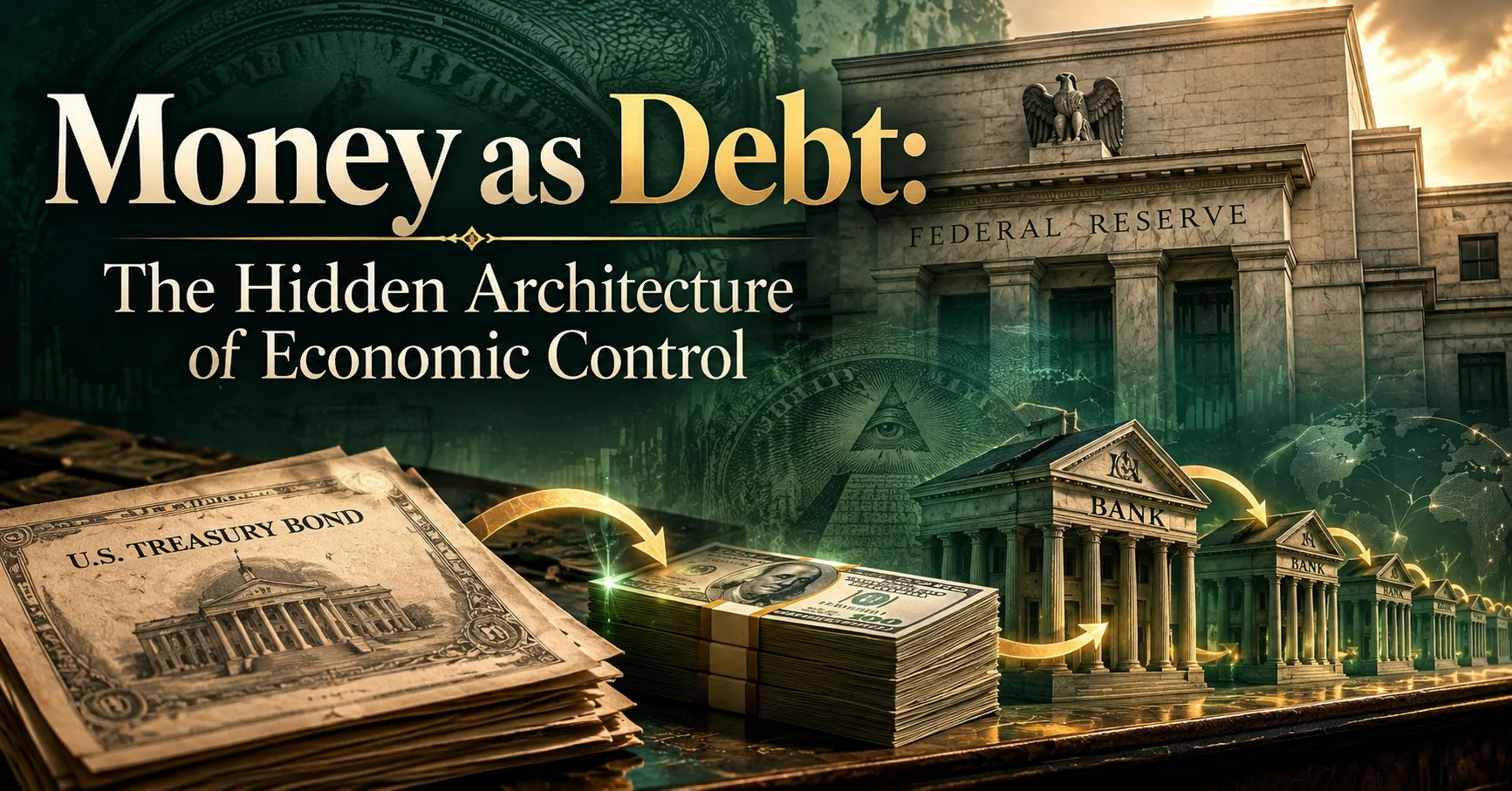
Bank of England

Bank of England

The Bank of England was born in 1694 to fund a war. William III needed £1.2 million to fight Louis XIV, Parliament wouldn't raise the taxes, and a group of London merchants solved the problem by creating money from nothing. That arrangement has never really ended.The mechanics were straightforward....

Read the full article →

4 replies 290 Read more →
MoneyMan ·Assessment Center ·5 months ago
Start Here: Monetary Literacy Assessment
MONETARY LITERACY & MASTERY FOUNDATION
ASSESSMENT 01 · KNOWLEDGE BASELINE

Monetary Literacy Assessment

Establish your monetary knowledge baseline before beginning your learning journey through the Monetary Literacy & Mastery Foundation.

10 QUESTIONS 5 MINUTES BEGINNER
ASSESSMENT 01 BASELINE
ACADEMY ASSESSMENT MONETARY LITERACY
ASSESSMENT GUIDE Assessment 01
PURPOSE KNOWLEDGE BASELINE
01
OVERVIEW Why Take It?
02
PREPARE Before You Begin
03
BEGIN Take the Assessment
BEFORE THE ACADEMY

Discover What You Already Know

Every day we earn money, spend it, save it, borrow it, and invest it. Yet very few people are ever taught what money actually is or how the monetary system works.

This short assessment is designed to establish your starting point before you begin the Foundation curriculum. It is not intended to determine whether you pass or fail.

Instead, it gives you a record of what you understand today so that you can compare it with what you understand after completing the Academy.

THE QUESTION How much do you really know about the monetary system you use every day?
01
ASSESSMENT SNAPSHOT

What to Expect

Assessment 1 is a short introductory quiz covering several of the monetary concepts explored throughout the Academy.

10
Questions

A short knowledge baseline

⏱
About 5 Minutes

Designed to be completed quickly

★
Beginner

No prior study is required

✓
Instant Results

Review what you got right and wrong

02
WHAT YOU'LL ENCOUNTER

Topics Covered

The questions introduce several ideas that will appear throughout your studies.

01
Money

Value and monetary functions

02
Currency

The monetary instruments we use

03
Banking

Deposits and money creation

04
Inflation

Currency and purchasing power

05
Central Banking

Monetary institutions and systems

06
The Constitution

Historical monetary language

?
BEFORE YOU BEGIN

Answer using only what you currently know.

Don't search online or look up the answers. The purpose is to discover your starting point, not to achieve a perfect score.

REMEMBER A low score does not mean you failed. A high score does not mean there is nothing left to learn. This assessment simply gives you a baseline against which future understanding can be measured.
READY TO BEGIN?

Take the Monetary Literacy Assessment

Complete all ten questions and submit your answers to receive your score. You'll be able to see which questions you answered correctly, which ones you missed, and review the answers afterward.

Begin the Assessment →
14 replies 1K Read more →
Load more
ForumSpark © 2023 - 2026 · ForumSpark.net · Terms